
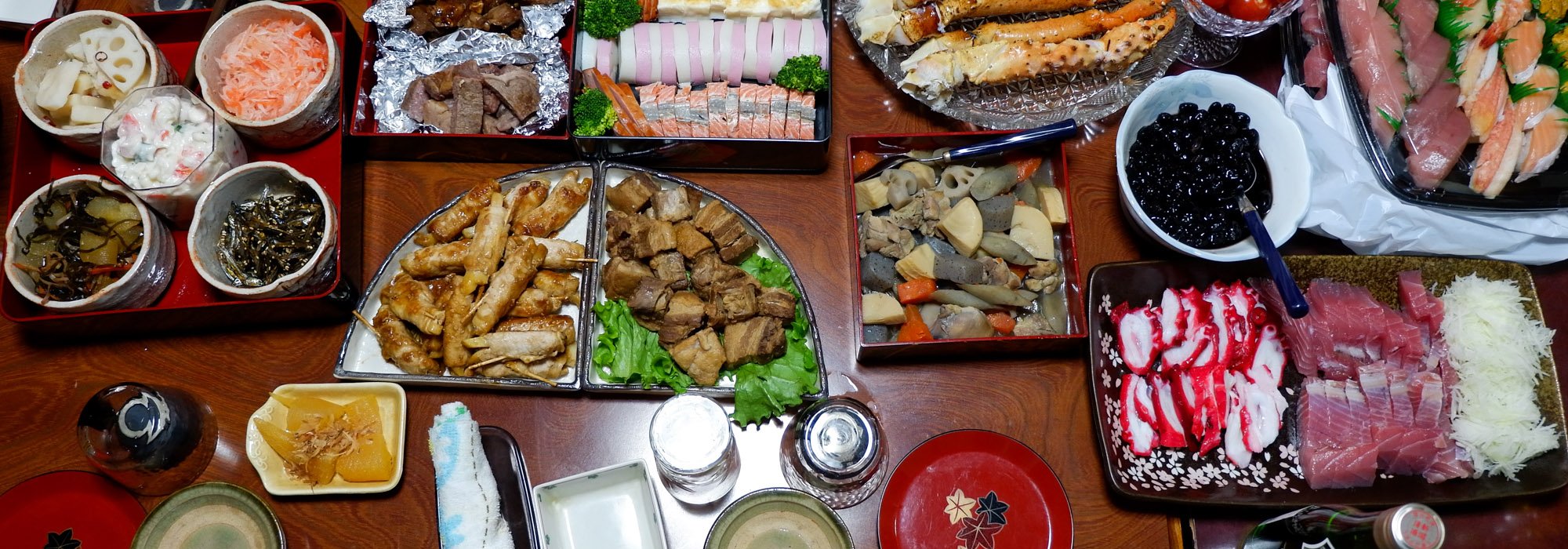
Osechi ryori
🍱 The Traditional Japanese New Year Feast
Osechi-ryori is the traditional Japanese cuisine that families eat to celebrate the New Year. It is displayed in several small dishes prepared in advance and kept in jubako compartment boxes. Each dish holds a symbolic meaning pertaining to good fortune for the year to come. Jubako can be purchased in advance at a caterer or Osechi food can also be made at home for people who have the time and enjoy cooking.
Osechi-ryori (御節料理) is one of the many traditions of the New Year in Japan. Osechi ryori is the name of the 1rst dishes shared by families when celebrating the New Year. All Japanese people share the same food, intended as symbolic offerings to themselves and their relatives and a wish for a happy new year.
This culinary tradition dates back to the Japanese Classical Age, when the imperial court in Heian gave Osechi offerings to the gods at every change of season, according to the former koyomi luni-solar calendar. The ritual then spread to the general population during the Edo period (1603 – 1868) but focused only on the New Year.
In the same manner at the traditional kaiseki cuisine of ryokan inns, Osechi ryori food includes miscellaneous small Japanese dishes (washoku), prepared with seasonal ingredients. The food is prepared in advance and preserved through pickling, fermentation or cooking in shoyu soy sauce, mirin, dashi broth, rice vinegar and / or sugar, and served cold or at room temperature for a few days.

Popular dishes and their symbolic meanings
The table below lists the most traditional Osechi dishes and their symbolic meaning:
Osechi foods can also include the 1rst soup of the year called ozoni (お雑煮), flavored with miso or dashi broth and including among other things mochi and vegetables. Lastly, depending on the households and the trends, the New Year table may also include fresh sushi 🍣, crab claws, octopus, (beef or pork) meat in bite size pieces or skewers, or more international recipes inspired by Italian, French or Chinese cuisines for example. The meal is usually paired with Japanese beer 🍺 or nihonshu 🍶 and people toast to the New Year with a cheerful: Kanpai!

Jubako: the compartment bento box
The celebratory food is placed in a large compartment bento 🍱 box, usually made of lacquer and in a quantity enough to fill up to 5 boxes stacked together, called jubako (重箱), to have food for the 3 first days of January. It is indeed important to set aside the daily chores over the few days to better welcome the New Year.
In the cities, many families now order their jubako several weeks ahead to specialized caterers or renowned restaurants. Prices for these New Year bento boxes can be quite expensive:
- From ¥50,000 (~US$312.40) for the most luxurious;
- The average cost for a traditional New Year jubako in 2025 was ¥27,826 (~US$173.80) according to the Japan Times; and,
- The most affordable ones cost around ¥15,000 (~US$93.71) for an osechi-ryori assortment purchased at the konbini.
Lately, Osechi is also available for people enjoying sugar, with wagashi confections and Western-style cakes. Most of the time, Japanese people buy part of the dishes at the delicatessen and make the remaining others at home.

The preparation of the New Year ends at the latest on the evening of December 31, the last day of the year called Omisoka (大晦日) in Japanese. On this occasion, the Japanese usually eat a buckwheat noodles bowl, the toshikoshi soba (年越しそば) to mark the passage to the new year and a reset of life. It is also a dish symbol of longevity, easy to cook and to digest before the Osechi-ryori feast that will be served over the next days.