
Fugu
🐡 Appetite for the Japanese Killer Fish
Fugu is a puffer fish containing tetrodotoxin, a lethal poison for humans. While traces of consumption from at least prehistorical times have been found in Japan, eating this fish was prohibited during the feudal period due to its haphazardness. Fugu’s bad reputation remains nowadays and is probably part of its attractiveness. Its delicate flesh is a beloved delicacy whose preparation is only allowed to qualified professional fish handlers.
Japan’s favorite puffer fish is of the Takifugu genre, mainly found in the waters surrounding the archipelago and swimming along the coasts of China and South Korea, and sometimes in rivers. The fish has 4 teeth resembling a beak, and adults can measure up to 85cm long with species variations. It is also called blowfish, a nickname describing its natural defense: the animal’s abdomen blows to make it look bigger and deter predators.
However, fugu is really dangerous when eaten, as its body contains tetrodotoxin (TTX), a poison deadly even in very small amount. On average, one fish contains enough toxin to kill about 30 human adults. The toxin causes a muscle paralysis, incurring a respiratory arrest in the hours following its consumption.

Toxic parts of the puffer-fish and poisoning statistics
Japan allows consumption of 22 fugu species, of which the flesh is normally edible without risk, provided it has been properly prepared. The neurotoxin is mainly found in the liver, the skin, the intestines, the ovaries and gonads of the fish.
Scientists think that what causes the toxin to accumulate in the fugu’s body is its diet. It indeed includes a specific type of algae that contains a bacteria producing the tetrodotoxin. Farmed fugu don’t eat this bacteria so they are supposed poison-free. However, some parts of the toxin’s synthesis process are not entirely known, so caution is called for regarding the preparation of the fish, that must always be done by a certified professional.
Fugu poisoning: statistics and symptoms
Poisoning can be avoided by not eating a toxic organ, such as the liver, but a bad handling of the fish during its cleaning can have the flesh contaminated. Contamination is very hard to detect as the neurotoxin is odorless, colorless and tasteless, and is heat-resistant.
The first poisoning symptoms appear from 20 minutes to 3 hours after eating, and without medical care, death can happen in 4 to 6 hours. There is no antidote to the tetrodotoxin: the only treatment is to hospitalize the victim and place them on life-support until the toxin wears off.
The symptoms to pay attention to are:
- A slight numbing of the mouth, the tongue and of the fingertips;
- Trouble walking; and,
- A headache or a stomach ache.
Then, paralysis gradually spreads to the body, blood pressure drops, and it becomes increasingly harder to breath for the victim, until they faint and eventually stop breathing.
However, and while it is impossible to eliminate the risk entirely, the consumption of fugu in restaurants is well-regulated and quite safe. Between 2003 and 2023, the Japanese Ministry of Health has identified 488 poisoning cases, involving 672 victims, with a total of 20 deaths, of which 14 were due to consumption outside of a restaurant setting. Most of the poisoning indeed happen in a private setting (377 cases of the 488 total cases, that is to say about 77%), often at a fisherman’s home where the fish was not prepared properly.

Certified fugu chef
It is therefore strongly advised to check before eating if a puffer-fish has been prepared by a certified chef knowing the standard practices and licensed in the prefecture where they are working. All restaurants serving puffer-fish are required to have a licensed fugu master taking care of the fish’s preparation.
Officially prohibited in the 16th century, eating fugu was allowed again at the end of the 19th century, first in Yamaguchi prefecture, then gradually in the rest of the country.
The first nationwide regulatory measures were implemented starting 1947, but each prefecture has kept its own certification requirements for the chefs. Since 2019, the Japanese government has put in place a unification of the practices with an eye on an eventual nationwide exam to certify the chefs have:
- A theoretical knowledge, with written tests on food hygiene and the puffer fish in general; and,
- A practical knowledge: identify the fugu species and its organs, cut a fish and handle its toxic parts.
A thorough knowledge of the fugu species is required as the risk varies from species to species. For example, the 2 most popular fugu have different rules regarding skin consumption: the torafugu’s skin is edible, while the mafugu’s skin contains tetrodotoxin.
Additionally, climate change impacts wild puffer fishes that tend to move away from their usual habitat and mingle with other puffer fish species, thus creating hybrid species and even more variations to the fish parts that can be toxic.
The toxic waste from the fugu cutting must be stored apart in sealed containers, until their incineration. Likewise, utensils used to cut puffer fish are only used for this type of fish and stored away to avoid any contamination.
Note that some parts, like the deadly liver, are prohibited from selling, as well as fugu flesh from a non-authorized species.
How to eat the fugu puffer-fish ?
Fugu, especially wild fugu, is considered a winter dish mainly consumed between October and March, even though eating fugu is possible all year long. Puffer-fish professionals even have establlished the Day of the Fugu in Japan on February 9, using one of the many readings of its kanji characters that sounds close to fugu (2 = fu and 9 = ku).
Wild fugu (天然ふぐ tennen fugu) is mainly fished off to the south of Hokkaido and in the Sea of Japan down to Fukui; in 2022 a total of 6,266 tons of wild fugu was caught. Farmed fugu (養殖ふぐ yoshoku fugu) is produced in the west of the archipelago, mainly around Kyushu and in the Seto Inland Sea. In 2022, the production of farmed fugu reached 2,812 tons, making it the 7th farmed fish in Japan.

Diverse fugu cuisine
Wild or farmed, the puffer fish can be prepared into various dishes, especially:
- Sashimi, the most famous dish that is called tessa or fugusashi ふぐ刺し. The flesh of the fish is cut in fine translucent slices, artistically arranged into a chrysanthemum flower in a large plate, whose decoration can be seen through the fish. The chefs use their creativity to shape the sashimi into traditional patterns, such as a crane spreading its wings. The ponzu sauce, a citrus-flavored soy sauce, is the ideal seasoning to dip the puffer fish sashimi in.
- Fugu nabe (also called chiri or tecchiri), is a stew made of fugu flesh and bones, vegetables and tofu cooked a konbu-based dashi stock. The cooked bites are dipped in ponzu sauce. At the end of the meal, the remaining broth is used to cook rice and make a kind of porridge, the fugu zosui ふぐ雑炊, to enjoy all the flavors of the fish.
- Karaage fugu, like chicken, puffer fish can be served breaded and fried after shaping its flesh into an easy to eat piece. It can be seasoned with ponzu sauce and salt.
- Fugu hirezake ふぐひれ酒 is a sake that was infused with a grilled or smoked fugu fin.
- Shirako is the fugu’s milt, whose availability is subject to the fish’s spawning period. It is usually available from January to March. The soft roe has a creamy texture and is served either raw, in tempura, grilled or cooked in a zosui (rice porridge).
When safe to eat, the fugu skin is favored for its high collagen content. Likewise, the fish’s flesh makes a high protein and low-calory dish.
As for the taste, the puffer-fish’s white flesh has a subtle flavor and its texture changes according to the cooking method:
- Raw, the flesh is very firm, slightly rubbery and sometimes crunchy; its flavor is fine, fresh and pleasant;
- Cooked, it is not so different from other fishes, but the flesh becomes tender;
- Fried, its taste is a little bit stronger;
- In the hirezake, the fin’s aroma is surprisingly strong.
As far as one can tell, there are close to no taste difference between a wild and a farmed fugu.
Where to eat fugu puffer-fish?
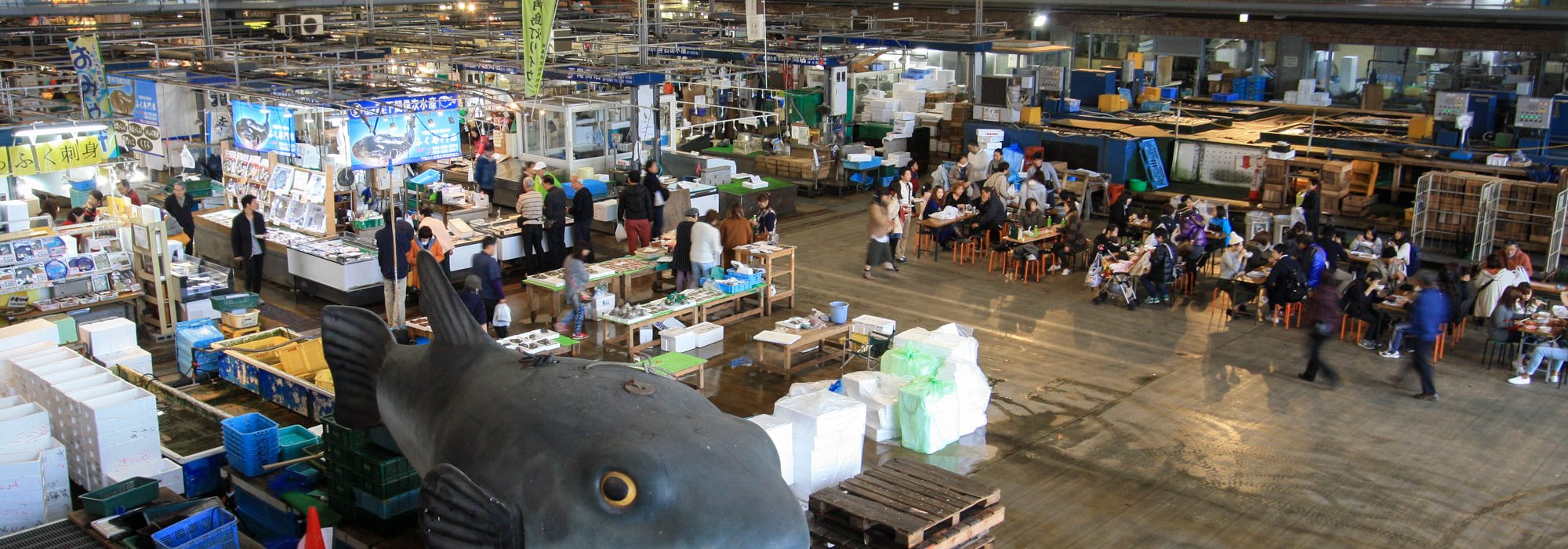
Shimonoseki, in Yamaguchi prefecture at the westernmost end of Honshu, is known as the Fugu Mecca. There, the fish is called fuku, an homophone of the word fuku meaning "happiness", as a reminder of the importance of the fish in the area’s economy. Shimonoseki is the main hub in the fugu supply chain, whether the fish is farmed, wild or imported. Its Karato fish market sells most of the existing fugu dishes, that are properly prepared by certified fishmongers. Fugu is also packaged to be sent throughout the country.
A fugu festival takes place every year at Nanfu Tomari, Shimonoseki’s fishing port, during one morning around February 11th. Admission is free to enjoy various fugu dishes at an affordable price.

Osaka, true to its name of Japan’s kitchen, is the place where fugu consumption is the highest (60 % of the national production every year!); the fish is nicknamed teppo 鉄砲 in reference to death that can hit the eater as fast as a bullet. Osaka also holds the record of the highest number of licensed fugu-masters: about 110,000, that is to say 5 times more than in Tokyo and 14 times more than in Shimonoseki! There, fugu is preferably served as a nabe, a convivial dish that is cooked and shared at the table. It was home to the historical Zuboraya restaurants, whose sign was a giant fugu paper, and that are now definitely closed.
Naturally, Tokyo is also a place to try fugu, with many restaurants established in the south-east of the city, near the former Tsukiji Market and up to Asakusa. Just make sure that the fish is prepared by a certified chef, which is a legal obligation for any place serving fugu. Likewise, it is advised to book in advance to ensure a quality experience. Last but not least: never follow a tout.
A fugu meal requires a comfortable budget: allow at the very least ¥5,000 (~US$32.24) per person for a sample menu in a restaurant of a specialized chain. We recommend trying a set menu with several variations of dishes to discover all of its flavors. As for the restaurants, Guenpin in Honshu and Hokkaido, or Torafugu-tei in Tokyo and surroundings are interesting places. Some restaurants provide delivery services and take away (2-servings order minimum).
Fun fact, to this day fugu is still banned from the meals of the emperor of Japan.