
Kenkoku Kinen no Hi
National Foundation Day in Japan
Kenkoku Kinen no Hi is a public holiday taking place every February 11th in Japan. Its date was chosen to commemorate the mythological origins of the country and is also associated to the first constitution of Japan. It was one of the archipelago’s most important celebrations from the Meiji Era to the war, and it is a national holiday since 1966.
Kenkoku Kinen no Hi (建国記念の日 "National Founding Day") takes place on February 11 and commemorates the day of the mythical founding of Japan by legendary emperor Jinmu. When this national day falls on a Sunday, the next Monday becomes a nonworking day, in accordance with the Japanese compensatory public holiday rule.
Origins of February 11 public holiday
As early as the 7th century, the Yamato Kingship, the embryo of what will later become Japan, was already concerned with the country’s foundation and the origin: in 604, the Court officials, using in particular the Chinese sexagesimal calendar, established the foundation of the country on the day of the enthronement of mythical emperor Jinmu, on a date estimated to be the 1rst day of the 1rst month of the year 660 BCE.
The historical tales and chronicles Kojiki (Records of Ancient Matters) and Nihon shoki (Chronicles of Japan) in the 7th century continued fostering the legendary date and the filiation of Jinmu and the imperial lineage to Amaterasu, the Shinto pantheon goddess.
Meiji Constitution
At the beginning of the Meiji era (1868 – 1912), the Japanese state reappropriates the founding myth to rally the people to the idea of a national body under the imperial family’s guidance. Its date is reevaluated to comply with the Gregorian calendar that was just adopted: the foundation of Japan is thus established on February 11th, still in 660BCE. The celebration named Kigen setsu (紀元節, litteraly "celebration of the beginning of the [imperial] era") is officialized throughout the country in 1872 and becomes a public holiday until 1945.
In 1889, another symbolic dimension is added to February 11: it becomes the day of promulgation of the first constitution of Japan. Also called "Meiji Constitution," this founding document establishes the bases of the modern Japanese state and is happily welcomed by the population. It came into effect the following year.

Kigen setsu’s renewal after the war
At the end of World War II, the U.S. Occupation forces abolish Kigen setsu due to its nationalistic implications and its links with the rise of Japanese militarism in the 1rst half of the 20th century.
However, from the early 1950s, a movement appeared to reinstate the day commemorating the founding of the nation, with the notable participation of the Shinto shrines Association (Jinja Honcho). The endeavor succeeds in 1966 with the revision of the public holiday law that introduces Kenkoku Kinen no Hi (National Foundation Day), a nonworking day observed on February 11 that aims at "fostering love for the country by commemorating its founding" (建国をしのび、国を愛する心を養う, Kenkoku wo shinobi, kuni wo ai suru kokoro wo yashinau).
The next dates of Kenkoku Kinen no Hi
- Wednesday, February 11, 2026;
- Thursday, February 11, 2027;
- Friday, February 11, 2028;
- Sunday, February 11, 2029 (the next Monday becomes a nonworking day thanks to the compensatory public holiday rule);
- Monday, 11 February, 2030.

What happens on Kenkoku Kinen no Hi
In the past, Kigen setsu’s holiday was a day of large public celebrations, including ceremonies, parades and even sports events, and aimed at public display of patriotism and reverence to the emperor.
Nowadays, official buildings are decked with the Japanese flag 🇯🇵 for the national day Kenkoku Kinen no Hi, but there is no large State-sponsored specific event, except for the Prime Minister’s traditional speech. Ceremonies still take place at the Imperial Palace, but they are attended only by the emperor and his court.
February 11 for Kenkoku Kinen no Hi is a nonworking day for administrations and schools and a lot of companies.

What to do on Kenkoku Kinen no Hi
If the official celebrations are restricted to a small committee, a large popular event is nonetheless staged by a political organization (日本の建国を祝う会, Nihon Keikoku wo iwaou kai, Committee to celebrate Japan’s National Foundation): the Kenkoku Matsuri. It consists of a big parade taking place in Tokyo every February 11 since 2020. It gathers about 12,000 participants, including marching bands and mikoshi carriers, that walk from 9 a.m. to 2 p.m. to connect the sites related to Meiji emperor in Shibuya ward:
- Meiji Jingu Gaien’s ginkgo avenue Icho Namiki;
- Aoyama avenue;
- Omotesando; and, lastly,
- Meiji Jingu shrine.
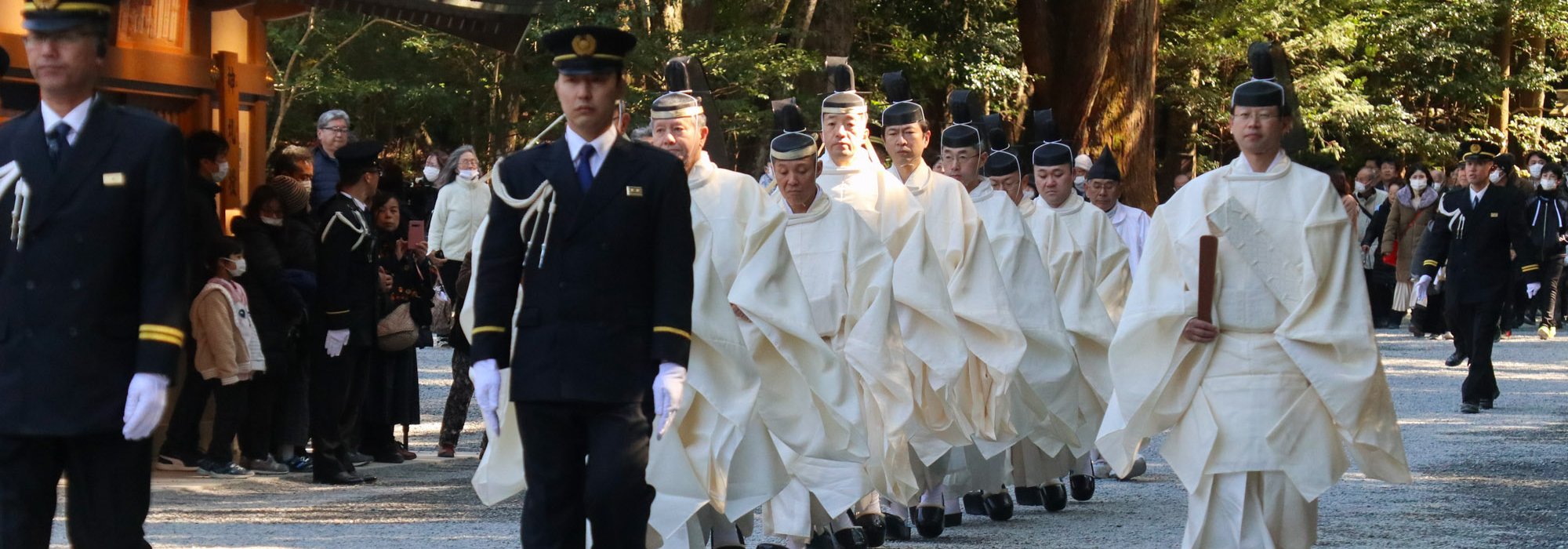
Many Shinto shrines celebrate February 11 for its religious undertones, linked to the first mythical emperor. These events and ceremonies are called Kigen-sai or Kenkoku-sai and usually take place in sanctuaries affiliated to Ise Grand Shrine or to the imperial household. One of the most famous is Kashihara-jingu, in Kashihara City, Nara prefecture, founded in 1889 on the site considered to be the grave or the former palace of emperor Jinmu.
Kenkoku Kinen no Hi is a relatively quiet public holiday and as such not very interesting for a leisure travel in Japan. February nonetheless remains a less busy touristic period, with affordable prices, and the ideal season for early plum blossom amateurs.