
Hanbey-Fu Honten
Specialist of "Fu" Vegetarian Cuisine in Kyoto
Hanbey-Fu Honten is the main shop of Hanbey brand, located next to Gojo Ohashi bridge in Higashiyama, in the east of Kyoto’s city-center in Japan. Specializing in fu and yuba-based recipes that are part of the traditional vegetarian cuisine of Kyoto, the restaurant offers a tasting experience both original and healthy.
Founded in 1689 by Hanbei Tamaoki, the Hanbey-Fu brand was initially a conventional grocery shop specializing in Kyoto’s vegetarian cuisine, especially:
- Kyo-fu, the "fu" cuisine based on wheat gluten;
- Kyo-yuba, the cooking of tofu milk skin.

Located at the south-east angle of Kawabata-Gojo intersection in Kyoto’s city-center, the shop was renovated in 2022 and houses 3 buildings offering a complete experience:
- First, a large modern glass building home to the main store at the ground floor, and the FuFuFu and... café at the 3F floor. With a panoramic view on the Kamo-gawa, the café serves fu and yuba all day long, in various original and modern dishes, such as Namafu Dengaku skewers.
- Then, a building of the Showa era (1926 - 1989) designed by Ryo Tanahashi (1907 – 1974) with Western inspiration is home to the traditional tea house Sabo Hanbey.
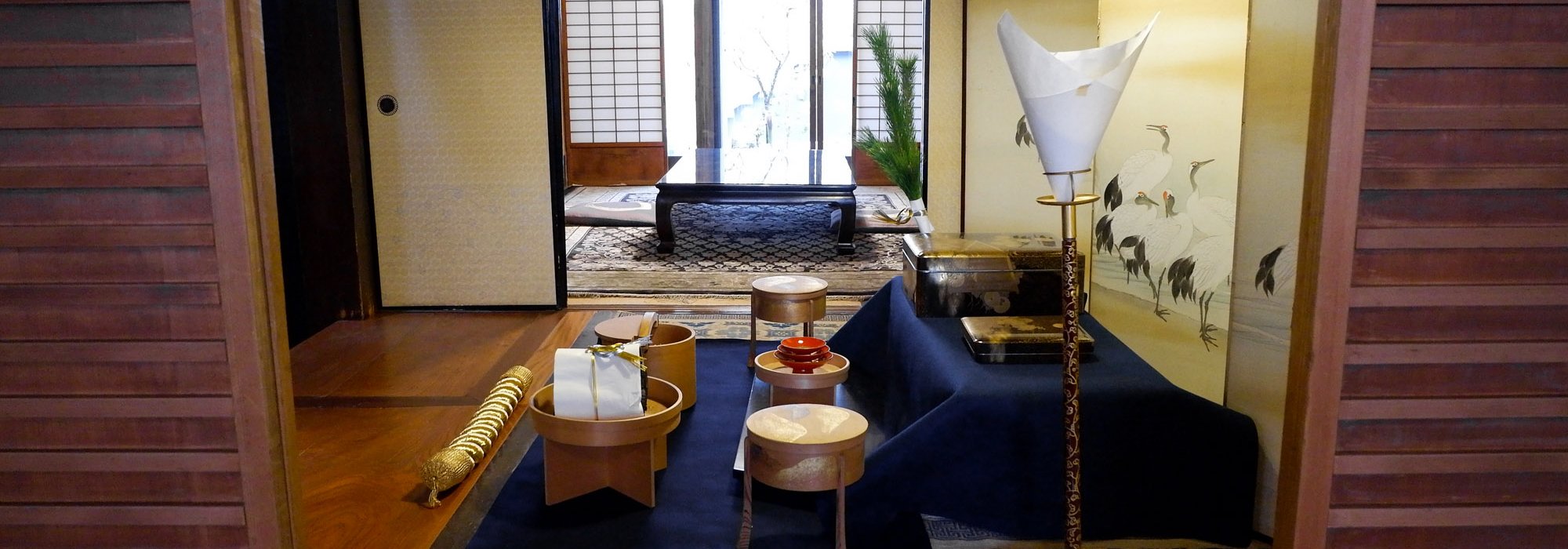
- Lastly, the traditional Kyoto town-house (Kyo-machiya) which is 120 years old, is used as an exhibition hall displaying its original preserved kitchen called okudo-san and a museum dedicated to bento 🍱 boxes.
A small inner Japanese garden is connecting the buildings together. We recommend taking your time when visiting the place to first discover what fu is as well as its taste in various dishes and end the tour by the museum.

What is fu in Japan?
Fu is a versatile ingredient whose main component is wheat gluten, made from wheat flour mixed with water, kneaded and washed thoroughly to remove starch (and consequently sugar). The final product is a gluten dough filled with vegetal proteins and low in calorie. It is the equivalent of seitan, which is better known in Western countries, and it is nicknamed "wheat meat" or "Buddha’s food". Since its introduction in Japan at the beginning of the Muromachi period (1336 - 1573) by Chinese Zen monks, fu has indeed become a staple of the traditional Buddhist vegetarian kaiseki cuisine called shojin ryori.
Plain fu doesn’t have a distinctive or powerful taste, but it absorbs the flavors of the other ingredients in a recipe, like condiments, aromatics, other cereal flours or sauces and broths. It can be eaten savory or sweet, hot or cold. There are 4 main preparation types that bring variety of textures, colors and shapes to fu:
- Nama-fu (生麩) is a steamed or boiled fu, that has an elastic texture similar to the mochi’s, and Kyoto is one of its main area of production;
- Yaki-fu (焼き麩) is grilled like a meat skewer or a dango 🍡, stir-fried in a pan, roasted in an oven or a slow cooker. Its soft texture is mainly used in Okinawa’s cuisine, or in the cuisines of Yamagata, Ishikawa and Niigata prefectures;
- Age-fu (揚げ麩) or abura-fu (油麩) refers to wheat gluten fried in oil, making a very nourishing dish particularly liked in the north of Miyagi prefecture and the south of Iwate prefecture (former Sendai domain); and, lastly,
- Kanso-fu (乾燥麩) is a fu that was baked then dried in the oven, for a longer shelf life.
Nearly every prefecture has its own fu and the local names are countless. On a daily basis, Japanese people like to eat fu as a topping and as a substitute for meat in miso soups, stews, donburi rice bowls or Japanese fondues like sukiyaki.

Bento box museum
The Hanbey-Fu brand has created an interesting small museum dedicated to the history of bento boxes in Japan. It displays a beautiful collection of ancient meal boxes of high quality, made in lacquered wood, some of which have mother-of-pearl inlays, as well a Hina dolls.
The exhibition offers another viewpoint on the Japanese culinary culture, and especially on the importance of the seasons. To convey the seasonal variations, outdoor dining sceneries are recreated showing people eating a meal carefully arranged in the compartments of their bento box, either at the mountain, by the water or under the blooming cherry trees 🌸 to celebrate hanami.
Various items of the traditional Japanese "take away" tableware can be observed, such as nihonshu 🍶 containers, chopsticks and travel tea sets.
This 100 % kyotoïte address nicely creates a connection between the past and the present of the Japanese vegetarian gastronomy.