
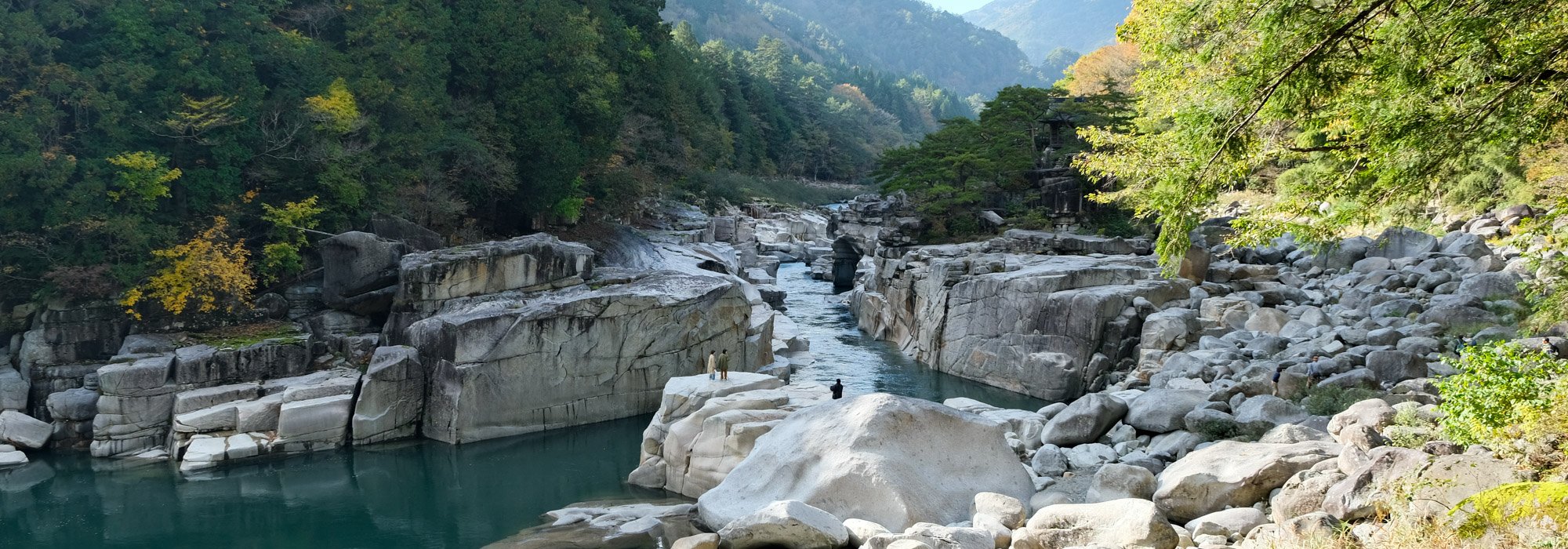
Kiso Valley
The Historic Road of the Edo Period
Kiso Valley is a remarkable geographic area stretching 60 kilometers across the Nagano and Gifu prefectures, flanked by the Central Alps to the east and Mount Ontake to the west. It offers a glimpse into a deep and authentic side of Japan, following in the footsteps of the historic Nakasendo trade route.
Kiso Valley is a remarkable geographic area stretching 60 kilometers across the Nagano and Gifu prefectures, flanked by the Central Alps to the east and Mount Ontake to the west. It offers a glimpse into a deep and authentic side of Japan, following in the footsteps of the historic Nakasendo trade route.
Stretching roughly 60 kilometers and connecting the southwestern part of Nagano Prefecture to the southeastern part of Gifu Prefecture, Kiso Valley was carved out by the river of the same name. The Kiso River rises at Mount Hachimori, part of the Hida Mountains range, and flows from north to south, passing at the foot of Mount Ontake to the west and the Kiso Mountains to the east (also known as the Central Alps).
The Kiso Valley has served as a trade and transportation route since as early as the 8th century, but it truly flourished during the Edo period (1603-1868), when the Gokaido, the 5 great roads of Edo, were established. The Kiso Valley road (Kiso Kaido) thus became part of the Nakasendo route, which connected Edo (Tokyo) to Kyoto through the mountains. As a result, 11 post towns were built or developed to allow travelers to rest and restock along the way, and a few of them still remain today as a testament to the region's vitality at the time.
Today, this wooded valley offers picturesque scenery for nature lovers, hikers, and onsen ♨️ enthusiasts. It also reveals an authentic side of Japan that will appeal to history buffs and those seeking places spared from overtourism, being a bit off the beaten path.
Local crafts have developed around the cypress trees that grow abundantly in Kiso Valley: the forest supplies construction timber for Ise Jingu Shrine as well as material for lacquerware. Visitors can also sample soba noodles, gohei mochi, chestnut-based dishes, and even horse sashimi.

A Hideaway in the Japanese Alps
Because of its secluded position between mountain ranges, getting to Kiso Valley takes a bit of effort, but that's also part of its charm. Indeed, the terrain can make journeys fairly long even though the actual distances are short.
The valley is mainly accessible by train 🚅 and is served by the JR Chuo Line, which connects Tokyo to Nagoya while crossing the Japanese Alps. The main railway hubs are Shiojiri (Nagano Prefecture) and Nakatsugawa (Gifu Prefecture). To give an idea of the travel time, it takes about 1 hour on the Shinano limited express train or about 2 hours on a local train to connect the stations of these two former Nakasendo post towns, located at either end of Kiso Valley.
Local buses can take you to certain sights outside the post towns, but keep an eye on their schedules, as service can be infrequent:
- The Kitaena Kotsu company serves the area around Nakatsugawa, Magome, and Tsumago, as far as Nagiso Station;
- The Ontake Kotsu company operates around Kiso-Fukushima, reaching Mount Ontake, Agematsu, and Nagiso.
Note that there are bus connections between Shinjuku (Tokyo) and Kiso-Fukushima or Narai-juku, with a travel time of about 4 to 4.5 hours.
It's also possible to get around by rental car 🚙 to explore even more off-the-beaten-path spots, or for greater flexibility than bus schedules allow. Be careful when driving in winter, though, as snowfall is frequent.

Kiso Valley in One Day
You can get a taste of Kiso Valley on a day trip from major cities like Nagoya or Matsumoto. The most popular sights include:
- The Nakasendo Trail between Tsumago-juku (Nagano) and Magome-juku (Gifu), which covers about 8 km of well-preserved paved paths through a picturesque Edo-period setting, alternating between forest and preserved buildings. It's best to set off early, since it takes about 1.5 hours from Nagoya (Shinano train to Nakatsugawa, then a 25-minute local bus ride) to reach Magome, or more than 2 hours to travel from Matsumoto to Nagiso (Tsumago-juku), also via Nakatsugawa.
[node 7465]
Nakatsugawa is also home to a few remnants of the post town of Ochiai-juku, including an original honjin inn and a bamboo grove.
- Narai-juku, another post town especially popular with Japanese visitors since it can be seen in a day, about 1 hour by train from Matsumoto and 2.5 hours from Nagoya. It features an old district of preserved inns stretching about 1 km, and it was once the most prosperous of the Nakasendo post towns;
- Kiso-Hirasawa pairs well with Narai-juku on the same day trip, thanks to its small preserved district specializing in Kiso lacquerware craftsmanship, where visitors can also take part in a lacquerware-making workshop.

Kiso Valley Over Several Days
If you'd like to spend more time in Kiso Valley, the most convenient option is to stay in Kiso (木曽町), ideally located in the center of the valley, which can serve as a base for day trips around the area. It offers a range of accommodations and is served by JR Kiso-Fukushima Station. Expect a journey of at least 2 hours from Kyoto and 3 hours from Tokyo. The Shinano limited express connects Nagoya to Kiso-Fukushima in about 1.5 hours.
Staying in Kiso therefore gives easy access to:
- Fukushima-juku, the former Nakasendo post town, its museum Yamamura Daikan Yashiki housed in an Edo-period lord's residence, and the administrative buildings of the old toll barriers, now converted into the Fukushima Sekiryo Shiryokan museum.
- Mount Ontake, Japan's second-highest volcano, rising to 3,067 meters. It's also a major spiritual site, and pilgrims dressed in white are a common sight there. It's about a 1.5-hour bus ride from Kiso-Fukushima, and can be climbed via a 3-hour hike or reached by cable car. Volcanic activity remains significant, with a deadly eruption as recently as 2014, so the mountain isn't always accessible. That said, basic lodges are available on-site for the more determined hikers.
- The Kaida Kogen Highlands, which offer a magnificent view of Mount Ontake. About 45 minutes by bus from Kiso-Fukushima Station, it makes for a pleasant outdoor outing centered on Kiso horses, local history, and various sports activities (hiking, winter sports, and onsen).
Also worth noting are Agematsu, which claims to be the birthplace of shinrin-yoku forest bathing thanks to its dense cedar forests (Nezame no Toko gorge); and Shiojiri, where winemaking has been underway for about 30 years.
You can also choose to travel through the valley in stages, just as travelers once did between eastern and western Japan.
A stay in Kiso Valley can last 3 or even 4 days for those wanting to soak up the slower pace of the mountains, and for fans of slow travel or sustainable tourism.

A Window into Japan's Past
Kiso Valley can be enjoyed year-round:
- From spring through fall, for beautiful nature walks;
- In winter, to enjoy its small ski resorts between Kiso and Mount Ontake.
Because it's surrounded by fairly high mountains, the weather in Kiso Valley can change quickly, so it's a good idea to pack warm clothing even during the warmer months.
Lodging in Kiso Valley mainly consists of traditional ryokan inns, often equipped with onsen, or minshuku guesthouses. There are few Western-style hotels 🏨 (business hotels) and even fewer luxury accommodations, so comfort tends to be fairly basic. Campgrounds, including some upscale glamping options, are generally open from mid-April to early November.
Finally, be sure to bring enough cash to cover any situation, since banks—the only places where you can withdraw money—keep limited hours. In general, most shops and restaurants close early.
Kiso Valley offers an appealing mix of outdoor activities and cultural visits, following in the footsteps of local figures such as the 12th-13th century female samurai Tomoe Gozen, or the 20th-century writer Shimazaki Toson, as well as delving into the history of the wider region. The well-preserved former Nakasendo post towns transport day-trippers into an idealized vision of the Edo period, complete with several castle 🏯 ruins, while the surrounding nature provides magnificent viewpoints and photogenic waterfalls. It's a great match for travelers looking to unplug and steer clear of overly touristy spots.