
Nagatoro
A Nature Getaway Near Tokyo
Nagatoro is a small mountain town located in the western part of Saitama Prefecture, northwest of Tokyo. Less well-known than its neighbor Chichibu, its gorges and geological rock formations along the Arakawa River draw city dwellers looking for a green escape just 2 hours from Tokyo. Sportier travelers or nature lovers can also extend their stay to 2 or 3 days for hiking and camping.
Nagatoro has been a favorite with Japanese tourists since the late 19th century. Its eponymous station, built in 1911, has kept its old-school charm and sets the tone for a visit meant to feel timeless and authentic.
Its streets with wide paved sidewalks sit within a landscape of rural hills, framed to the west by the small Mount Hodo-san and to the east by the Nagatoro gorges, carved out by the Arakawa River, which flows into Tokyo Bay. Its banks are lined with striking rock formations that have earned the town the nickname "the cradle of Japanese geology."

A Small Mountain Destination Between Sport and Nature
Nagatoro is worth visiting year-round, but especially from spring to fall: particular care has been given to the variety and succession of blooms, including the many sakura 🌸 that beautify the town in late March and early April. There are also poppies, plum trees and rhododendrons, not to mention the maple trees with their fiery koyo 🍁 autumn foliage later in the season. A little further from downtown Nagatoro, the gardens are home to hydrangeas, shiba-zakura moss pink and hagi Japanese bush clover, which bloom from July to October.
Outdoor activities are also on offer, starting with rafting on the river and hiking along the many trails that wind through the surrounding hills. The town also has several campgrounds for a stay close to nature, plus a few ryokan with onsen ♨️ hot springs to unwind after a long walk.

Mountain Cuisine
As is often the case in Japan's mountain regions, buckwheat soba noodles are a local culinary staple. Kurumi dare soba, noodles served cold with a walnut-based sauce, is one of the signature dishes. In winter, you can enjoy okkirikomi, a hearty dish made with seasonal vegetables and thick udon wheat noodles cooked together in a broth, also popular in neighboring Gunma Prefecture.
Miso plays a starring role in Nagatoro cuisine such as in:
- The misozuke marinade, an old preservation method now mainly used for pork meat, which is then grilled; or,
- The sweet-and-savory sauce that coats the miso-potato, that are bite-sized potato pieces cooked as tempura and served on skewers like dango 🍡.
Other local specialties include:
- Ayu, a small river fish caught in the Arakawa and usually served grilled with salt or fried whole;
- Waraji katsu don, a rice bowl topped with a breaded pork cutlet seasoned with a sweet soy sauce; and,
- Kakigori 🍧, a summer treat made from natural ice, with the Nagatoro region being one of Japan's main suppliers. A small mountain of shaved ice is served with toppings such as matcha, sweet red bean (azuki) paste or various syrups.
To the Rhythm of Matsuri
Neighboring Chichibu is known for its Yomatsuri night festival held in early December, but Nagatoro holds its own with:
- The Daruma Ichi market at Tosho-in Temple (Hagi-dera, the "bush clover temple"), held every January 13th, where visitors can buy a lucky Daruma doll, at the northern edge of town;
- The Nagatoro Hi-matsuri fire festival, held on the first Sunday of March, where monks walk on fire at Fudo-ji Temple at the foot of Mount Hodosan;
- The Nagatoro Funadama Boat Festival, held every August 15th, featuring fireworks alongside a parade of boats topped with lantern towers on the Arakawa River, drawing around 70,000 visitors each year.

The Must-See Highlights of Nagatoro in 1 Day
Nagatoro is well served by Seibu trains, and even though the trip from Tokyo can take up to 2 hours, you can see the highlights in a long day trip by leaving around 7:30-8:00 am. The visit can start with:
- Hodo-san Jinja Shrine, its entrance marked by a large white torii ⛩️ gate with gold details. Simply walk up Hodo-san Sando Avenue, lined with cherry trees, from Nagatoro Station for about 15 minutes. Legend attributes its founding to the mythical Prince Yamato Takeru more than 1,900 years ago, after he was saved from a forest fire by mysterious black-and-white dogs. It was awarded 1 star in the Michelin Green Guide for its main hall, the Honden, with its spectacular colorful carvings.
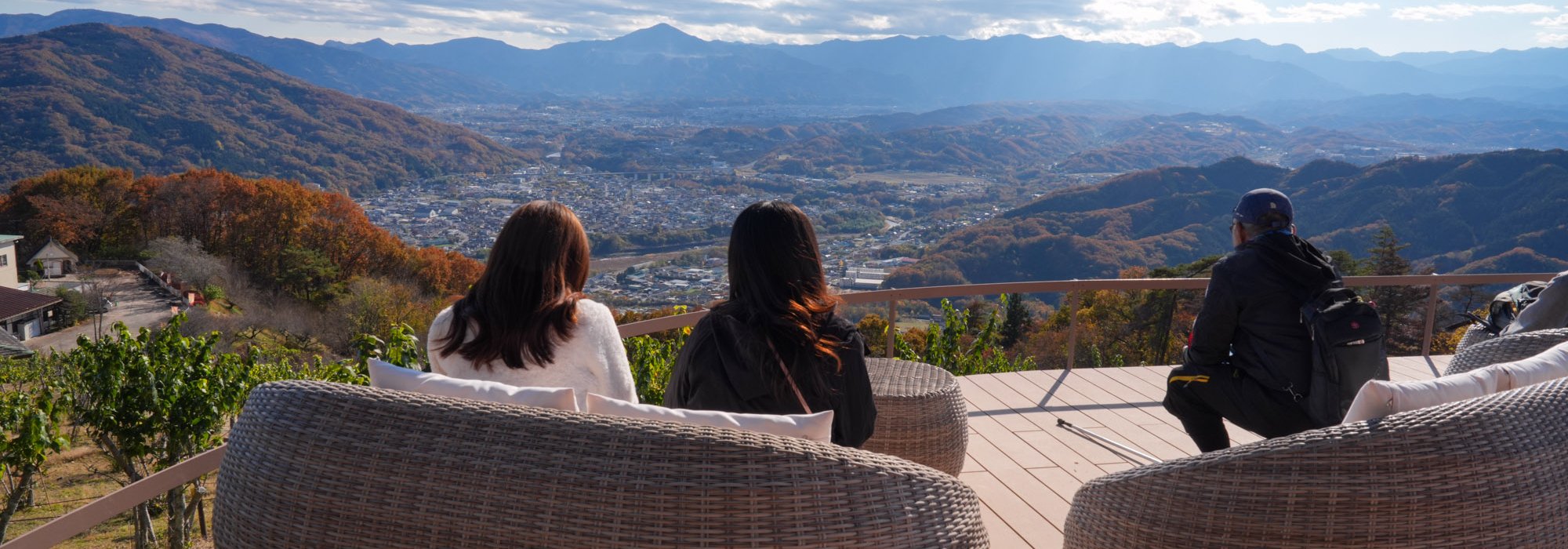
The morning can be devoted to Mount Hodo-san, whose summit is easily reached by cable car 🚙. It rises to 497 meters, offering a lovely view of the foothills of the Japanese Alps, including Mount Chichibu and Mount Asama.
Part of the afternoon can be spent on a trip down the Arakawa River, with several options:
- A fairly relaxed cruise on a traditional pole-punted boat;
- A more adventurous ride rafting (bring a change of clothes); or,
- Simply walking along the riverbank to better appreciate Nagatoro's geological formations, such as:
- Iwadatami (the "stone tatami"), a 500-meter-long, 80-meter-wide schist plateau resembling a stack of tatami mats, roughly 80 million years old;
- Across from it, the striking Chichibu Sekiheki ("Chichibu Red Cliff"), a 20-meter-high, 500-meter-wide red rock wall; and,
- The sacred Bonten Iwa rock, just before a stretch of rapids on the river.
To finish, you can stroll along Iwadatami Shopping Street, which runs for about 400 meters between Nagatoro Station and the rock formation of the same name. It's home to souvenir shops and local specialty stores, as well as several places to eat. Most businesses close around 5:00 pm.
After that, all that's left to do is hop back on the train 🚅 to Tokyo.

Nagatoro and Chichibu in 2 Days
Nagatoro and its surroundings can be explored over a longer stay of about 2 to 3 days, ideally with a rental car to reach places less well served by public transportation.
An extra day in Nagatoro can be used to explore the town further, particularly along Hodo-san Sando Avenue, including:
- Hana no Sato Garden, famous for its poppies from May to July;
- The old Arai House right next door, now a local history museum covering the Edo period and silk farming; or,
- An easy hike between Nagatoro and Kami-Nagatoro stations, passing through Nodoyama (Notsuchiyama) at the foot of Hodo-san and its sakura groves;
- The Saitama Museum of Natural History near Kami-Nagatoro, for fans of fossils and giant sharks.
Alternatively, the day could be spent wandering around the town of Chichibu, about 20 minutes away by Chichibu Railway train, with highlights including:
- Hitsujiyama Park (Ohanabatake Station), with lovely seasonal blooms, especially striking during the shibazakura (phlox subulata) bloom from mid-April to early May;
- The Matsuri no Yu onsen near Seibu-Chichibu Station, an entire hot-spring-themed park where visitors can soak in a bath, go shopping, and try local miso-based specialties as a full meal or a snack.
Densha otaku train enthusiasts should plan a visit to Nagatoro and its surroundings on a weekend to be able to ride the SL Paleo Express steam train (reservations recommended), operated by the Chichibu Railway company.

Chichibu Tama-kai National Park for a 3rd Day
For a 3rd day, ideally with a rental car, you can push the exploration further into the fringes of Chichibu Tama-kai National Park, following the Arakawa River upstream, about 40 minutes' drive from Nagatoro:
- Kakashi no Sato, also accessible from Mitsumineguchi Station. Created in 2016, this scarecrow village sits on the former site of Niekawa-juku, an old post town (not to be confused with the one with the same name on the Nakasendo Route in Nagano prefecture), and aims to revitalize this historic site;
- Mitsumine-jinja Shrine, about 40 minutes' drive from Mitsumineguchi (or roughly an hour by bus). It shares the same origins as Hodosan-jinja and is guarded by 2 wolves instead of the usual koma-inu guardian dog statues. Its halls extend into the forest of Mount Mitsumine, with the richly decorated Haiden, adorned with colorful carvings, as the highlight of the visit.
Depending on the season and time available, the region is full of scenic spots, such as:
- The ice formations of Misotsuchi no Tsurara in January and February;
- Hiking routes of varying difficulty within Chichibu Tama-kai National Park, which stretches across the southwestern part of Saitama Prefecture and into the neighboring prefectures of Nagano, Yamanashi and Tokyo.
It's also worth noting that it's advisable to bring enough cash in yen 💴, since many businesses in the Nagatoro area don't accept credit cards 💳, and IC cards (Suica or Icoca) can't be used on the Chichibu Railway network, among others.
Hikers face a higher risk of encountering bears if they venture outside built-up areas, particularly in and around the national park (bears have, for instance, been spotted near Mitsumine-jinja). In general, hikers should be mindful of snakes, some of them venomous, which are far more common than bears. Lastly, if walking along the riverbank, be careful, as the banks can be slippery.
Likewise, rainfall can suddenly affect the river's flow, so it's worth checking the weather forecast before heading out.
That said, Nagatoro and its surroundings offer a peaceful outing in an authentic, rural setting, a bit off the beaten path, and at an affordable budget for a day trip.