
Chikurin-ji
The Great Temple of Kochi
Chikurin-ji is the 31rst temple of the Shikoku Ohenro Pilgrimage, located on Mount Godai in Kochi in the south of Shikoku island in Japan. A tall 5 story-pagoda and an Edo period garden make the temple stand out next to its neighbor the Makino Botanical Garden.
Located a 30 minutes’ bus ride from the center of Kochi, Chikurin-ji temple is standing at the top of Mount Godaisan, just next to Makino Botanical Garden. It is very popular all year long among families and students coming to pray Monju Bosatsu, the Buddha of wisdom.
The only Shikoku pilgrimage temple dedicated to Monju Bosatsu
Chikurin-ji is also the 31rst official stop on the Ohenro Shikoku 88 temples pilgrimage and the only temple of the route dedicated to Bodhisattva Monju Bosatsu. At the beginning of the 8th century, emperor Shomu sent Gyoki (行基, 668–749), a popular traveling monk, to built a temple honoring the Bodhisattva Monju that had appeared to him in a dream. Gyoki roamed the country and chose a small mountain in Kochi that he named Godaisan, referring to China’s Mount Wutai said to be the deity’s residence. He founded the temple there in 724 and built a 3-story pagoda. He also supposedly sculpted the sacred image of Monju, that is said to be the oldest in Japan and that is still preserved from the layperson’s eyes.
Chikurin-ji is part of the Shikoku pilgrimage as Kukai (Kobo Daishi) stayed there from 806 to 809.

Conservatory of Japanese medieval heritage
The lush vegetation of the mountain is home the temple, sitting in a green oasis with 2 entrances. The 1rst is a contemporary concrete and wood building near the exit of the botanical garden, that opens on 2 places enlisted as Japanese heritage:
- Shoin, a reception hall built in 1816 to host the officials of Tosa domain, and is a remnant of the architecture of the 2nd half of the Edo period, combining several styles of precedent periods. It was designated Important Cultural Property in 2016;
- The Zen garden, supposedly designed by monk Muso Kokushi in 1318 as he was walking the pilgrimage route in the area. The azalea bushes and the small pond recreate famous landscapes of Chinese Buddhism by making good use of the hilly grounds around the Shoin. It was designated Natural Monument in 2004; and,
- The Treasure Hall, that houses about a dozen of statues dating back to the Heian and Muromachi periods.

Foliage canopy covering several places of contemplation
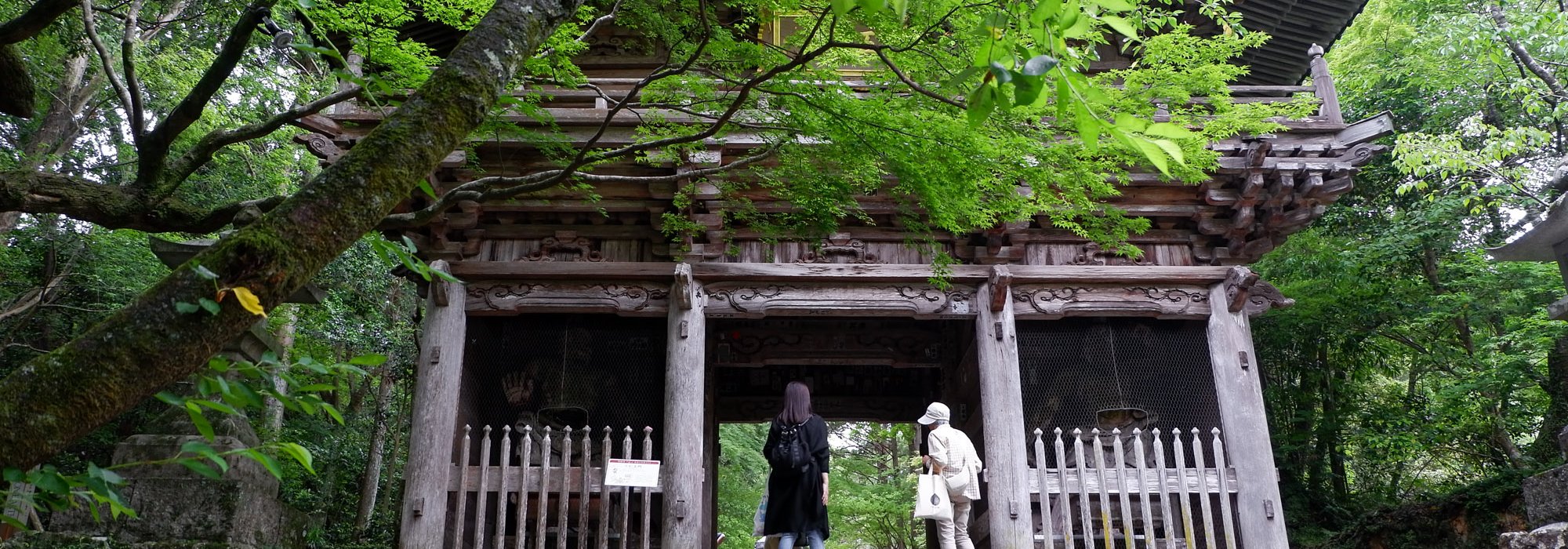
The traditional Sanmon gate is standing at the top of a stone stairway a few dozen meters further down the road, guarded by 2 ferocious Nioo. On the right hand just after the gate, the path leads to the temple’s bell that anyone can ring before starting the visit. Another paved alley under the cover of the trees connects the Sanmon gate to the places of worship, such as:
- The main hall Hondo or Monju-do dedicated to Monju Bosatsu, built by Tosa’s daimyo lord in 1644, currently the oldest building of the temple and designated Important Cultural Property;
- The 31 meters high 5-story pagoda. Built in 1980 in a style referring to the early Kamakura period, it replaces the former 3-story pagoda destroyed by a typhoon in 1899. It is dedicated to the Buddha Dainichi Nyorai;
- A cemetery, a "wall" of Jizo statues and several smaller pavilions dedicated to other Buddhas including Shoten (Kangiten / Ganesha), the elephant god prayed for successful business.
While the name of the temple evokes a bamboo grove, it is mainly known for its cherry and maple trees. Beautiful beds of mosses also grow under the extensive and thick canopy.

Chikurin-ji offers a relaxing and charming visit all year long, and especially in autumn when the koyo 🍁 turn red. The temple is mainly busy with the local population, partly due to its proximity with the botanical garden, but also for its ritual festivals taking place throughout the year, such as Hana Matsuri, celebrated here in May, or for the moon-viewing Kangetsukai in autumn, with a light-up of the temple’s alleys and garden at night.
There are 3 other temples of the Shikoku pilgrimage in Kochi and its surroundings: Zenjibu-ji (n°32), also founded by Gyoki; and Sekkei-ji (n°33) and Tanema-ji (n°34), both founded by Kobo Daishi.