
Oita (Prefecture)
The Lush Onsen Country in Kyushu
Oita Prefecture is a Japanese prefecture located in the northeast of Kyushu island, in southern Japan. Bordered by the prefectures of Fukuoka, Kumamoto and Miyazaki, it is known for its volcanic terrain rich in hot spring onsen. Tourists mostly gather in the hot spring towns of Beppu and Yufuin, as well as in the nearby Kunisaki Peninsula.
A coastal region located in northeastern Kyushu, Oita Prefecture corresponds to the former Bungo province, founded back in Japan’s Classical Age. Its urban landscape, made up of about 15 mid-sized towns, developed mainly along the coast of the Seto Inland Sea, which faces Shikoku island as well as Yamaguchi Prefecture in southern Honshu. The main population centers include:
- Oita, the prefectural capital of the same name, with a recorded population of 475,000 in 2023;
- Beppu, the town with the most onsen ♨️ hot springs in Japan; and,
- Nakatsu, a former feudal village.
Beyond this administrative breakdown, the region's volcanic landscape and humid subtropical climate ensure lush, thriving nature year-round. For the Japanese, Oita is seen as a traditional hot spring 🌸 destination, a rural region ideal for relaxing and recharging in health-focused contact with nature. It is home to the Kuju mountain range, which stretches inland toward Kumamoto Prefecture to the west and connects with Mount Aso, an active volcano 🌋, within Aso-Kuju National Park.
From Fukuoka, Oita is easily reached by train 🚅, with several local JR lines serving the prefecture's towns. Renting a car 🚙 is also a great option for getting around the Japanese countryside and reaching some remarkable natural sites, such as waterfalls, unspoiled plateaus, and rock formations. As for accommodations, the region is full of traditional Japanese inns, or ryokan, as well as hotels 🏨. The prefecture also hosted matches during the 2019 Rugby World Cup in Japan. Farm stays are also available in the region.

Beppu and Yufuin: Oita's Popular Hot Spring Towns
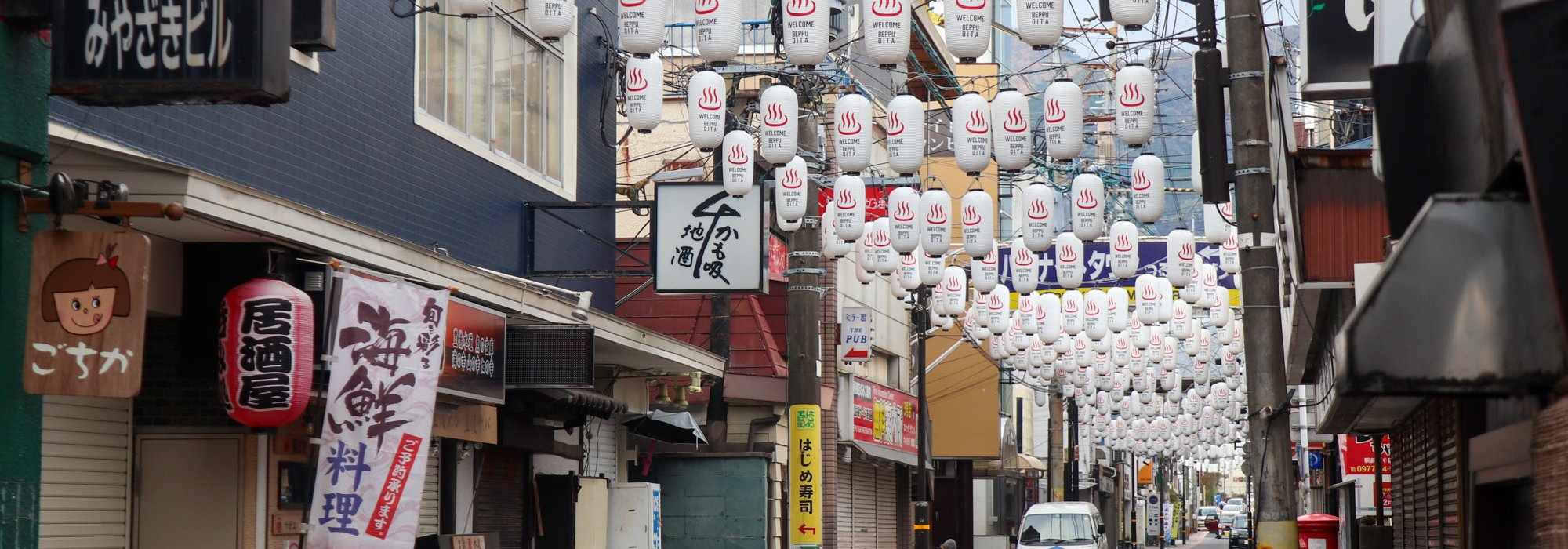
Oita is visited first and foremost for its hot spring towns, the most famous being Beppu and Yufuin. Considered Japan's hot spring capital, Beppu has a uniquely intense geothermal activity. Steam constantly rises from the ground, and the town counts 8 distinct hot spring areas known as Beppu Hatto. The Kannawa district remains the most typical and touristy part of Beppu. Here visitors can try Jigoku-mushi steam cooking using onsen heat, as well as experience the surprising Jigoku Meguri, or "Hell Tour." These are extremely hot springs, each with its own distinctive color and mineral composition.
In a more natural setting, at the foot of Mount Yufu, the village of Yufuin enchants its many visitors. Tucked into the forest along the shores of Lake Kinrin, the ryokan inns of this hot spring town offer a lush retreat centered around daily hot baths and traditional Japanese kaiseki cuisine. A small shopping district (often crowded on weekends) rounds out a stroll through the town center. Note that the colder seasons tend to draw the largest crowds, as visitors come to fully enjoy the warmth of the onsen, especially in autumn with its koyo 🍁 red foliage.

The Kunisaki Peninsula: A Unique Culture Surrounded by Feudal Heritage
The Kunisaki Peninsula is reached by following the coastline north of Beppu Bay. The castle 🏯 town of Kitsuki stands out as one of its main attractions, often dubbed "Kyushu's little Kyoto." Beyond its modest keep, set at the mouth of the Yasaka River where it meets the Seto Inland Sea, the town is worth visiting for its well-preserved samurai districts, where several traditional bukeyashiki residences are open to the public. The crossing of the Suya-no-saka and Shioya-no-saka slopes marks the highlight of this historic stroll through feudal Japan. Not far away, visitors can experience a complete change of pace with the sugary-sweet world of Hello Kitty at the Harmonyland theme park 🎡 in Hiji.
From there, travelers head inland to discover the ancient culture of a region known as Rokugo Manzan. This unique blend of syncretic beliefs can be experienced at Futago-ji Temple, which dates back to the 8th century and sits on the slopes of Mount Futago, the peninsula's most sacred site. Other spiritual sites round out the visit, such as the rock-carved Buddha statues of Kumano Magaibutsu, set amid a landscape rich in forests and rice paddies.
Around the municipality of Bungotakada, travelers reach the northern, more urbanized coastline of Oita Prefecture, including the towns of Usa and Nakatsu. Several historical and natural sites are worth seeing, such as:
- Showa no Machi (Showa Town), a reconstructed shopping street from the Showa era (1926-1989);
- Usa-jingu, the 1rst of the Hachiman shrines;
- Nakatsu-jo, one of Japan's 3 "castles on the sea" (mizujiro); and,
- Yabakei Gorge (耶馬渓), known for its striking rock formations along the water.
Note that Oita Airport is located on the Kunisaki Peninsula, not far from Kitsuki.

The Kuju Mountains: Countryside at the Heart of the Volcanoes
The plains at the foot of the Kuju Mountains offer a refreshing escape into the Japanese countryside. To the northwest lie the small farming towns of Hita, Kusu, and Kokonoe. The first 2 are especially known among tourists for their seichi junrei pilgrimage sites, tied to:
- Manga Attack on Titan (Shingeki no Kyojin), whose author Hajime Isayama hails from Hita; and,
- Animated film Suzume, whose director Makoto Shinkai drew inspiration from the Bungo Mori Roundhouse railway site in Kusu for the opening of the story.
Several stunning natural landscapes can be found in this area, including Tadewara Wetlands, views of Shindo no Taki falls, and Narukogawa Valley as seen from Kokonoe Yume Otsuribashi suspension bridge.
In the southern part of Oita Prefecture, travelers set off from the town of Taketa, known for its Nagayu Onsen hot springs, on their way toward the coast. Along the way lie the striking Harajiri and Chinda Falls, located on either side of Ogata Station in the town of Bungo-ono. The regional tour finally comes to an end with the ancient stone Buddha statues of Usuki Sekibutsu, designated a National Treasure of Japan.