
GREEN×EXPO 2027
The International Horticultural Exposition in Yokohama
GREEN×EXPO 2027 is the next International Horticultural Exposition, running from March 19 to September 26, 2027, in the city of Yokohama, south of Tokyo, Japan. Recognized by the BIE and AIPH as a major Category A1 world exposition, GREEN×EXPO 2027 offers a unique opportunity to admire all of Japan's iconic blooms gathered in 1 place, alongside an open reflection on the green spaces of tomorrow.
Following Osaka in 1990, it's now Yokohama's turn to host the next World Horticultural Exposition, taking place from Friday, March 19 to Sunday, September 26, 2027, under the theme "Landscapes of the Future for Happiness."
The official online ticketing platform has been open since March 19, 2026, exactly 1 year to the day before the grand opening of this new international flower exposition. About 10 million flowers and plants will be on display throughout the event's 6-month run. From spring to fall 🍁, visitors will be able to enjoy Japan's iconic blooms, following the traditional koyomi calendar's 72 micro-seasons. There's no bad time to visit, since the exposition has been designed to remain lush and in bloom throughout its run.

GreenxExpo 2027 will open right as sakura 🌸 blossoms begin to bloom in Japan, and 600 cherry trees spanning 40 different varieties have been planted for the occasion. As with Osaka's Tsurumi Ryokuchi Park, the exposition grounds could well become, in a few years' time, a great spot for hanami in Yokohama.
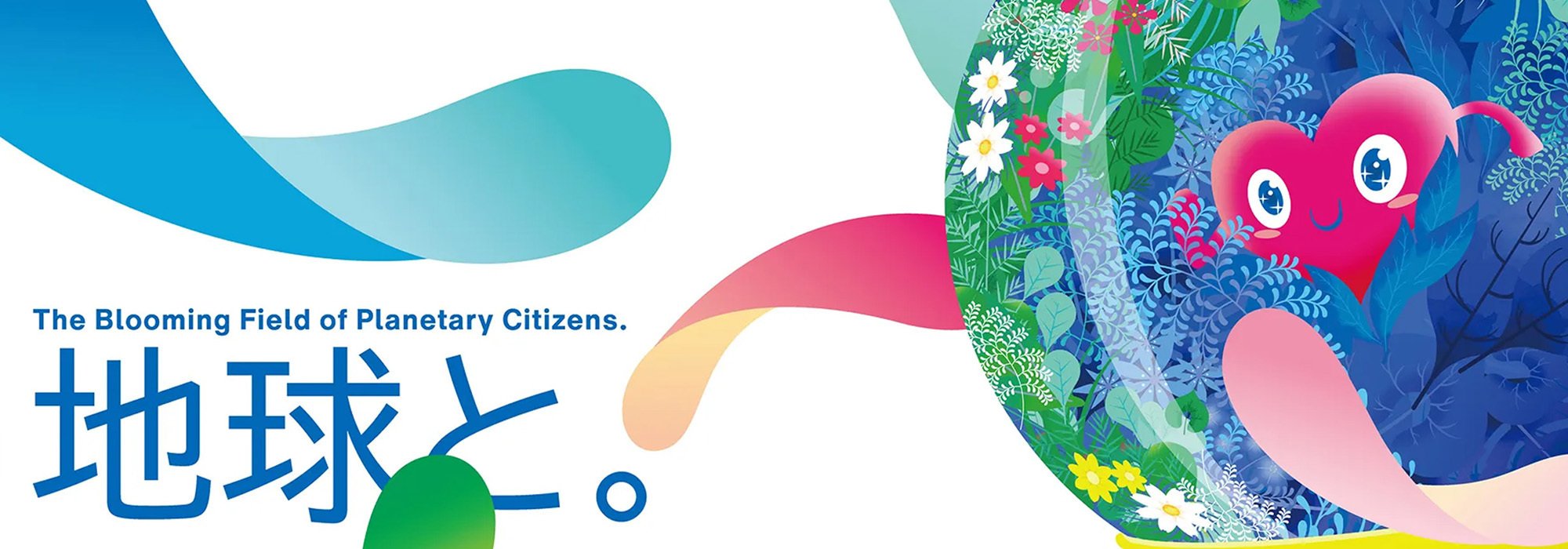
On the kawaii side of things, the expo's official mascot is named Tunk-Tunk, a flower-covered, snowball-shaped creature with legs, hiding a very much alive pink heart complete with 2 eyes and 2 arms. It was designed by Japanese director and illustrator Atsushi Makino.
Horticulture enthusiasts and families with children are the primary audience for this exposition, which spans 100 hectares on the former Kamiseya military base and communications station, located west of Yokohama in the Kanto plain. Built in 1938 by the Imperial Japanese Navy, the Kamiseya base was placed under American administration at the end of World War II and wasn't returned to Japan until June 2015.
Located away from Yokohama's touristy waterfront area, the GreenxExpo 2027 site is reachable by local train 🚅 (Sotetsu Line), about 25 minutes direct from Yokohama's JR station to Seya Station, the closest stop. From there, visitors can reach the exposition on foot (roughly 30 minutes, or 2 km) or via a dedicated paid shuttle bus, a 10-minute ride.
For international visitors on vacation in Japan, we recommend setting aside 1 to 2 days for a visit from Yokohama, Tokyo, or even Enoshima in Sagami Bay, via the Odakyu Line. For a more tailored itinerary, it may be worth turning to a Japan travel specialist such as Keikaku, which can handle advance ticket bookings for GreenxExpo 2027 and build a custom trip around the event.

☢️ The "Reconstruction Soil" Controversy
Heated discussions are currently underway regarding the redevelopment of the Kamiseya area and its conversion into horticultural grounds. Since April 2026, the Japanese government has been considering reusing soil originally contaminated by the 2011 Fukushima nuclear accident on the GreenxExpo 2027 site.
According to Japan's Ministry of the Environment, 3/4 of this soil is now considered decontaminated, meaning it shows low radioactivity levels, below international safety standards (under 1 millisievert). This "reconstruction and revitalization soil" could then be reused in flower beds and other areas around the exposition site—something that already happened at Osaka's 2025 World Expo. A group of Yokohama residents opposes the plan, arguing among other things that, unlike Osaka Expo 2025's remote artificial island of Yumeshima, this horticultural exposition site sits close to residential neighborhoods.

With 6 months to go before the opening, neither the government nor the city of Yokohama has issued an official response. However, it was reported in August 2026 that "reconstruction soil" had already been distributed to the cities of Sendai and Tokyo as part of public works projects.

🏡 Organized Into Villages and Pavilions
GreenxExpo 2027 centers on green spaces, agriculture, and humanity's relationship with the plant world. The international exposition aims to serve as a window for reflection on the Earth of tomorrow, addressing today's environmental and climate challenges and how to coexist with nature as harmoniously as possible.
In practice, this takes the shape of 5 themed villages spread across the exposition's roughly 100 hectares. Within these landscaped districts, visitors will also find several dozen pavilions, each offering a unique experience.
The Exposition's 5 Worlds
GreenxExpo 2027 is organized into 5 "Villages," true open-air thematic worlds where visitors wander among gardens, installations, and experiences built around a shared theme:
- Urban GX Village explores cutting-edge technology in service of a decarbonized society, as part of the green transformation movement toward more sustainable cities;
- Craft Village focuses on traditional Japanese craftsmanship shaped in harmony with nature;
- Farm & Food Village examines well-being through agriculture and food;
- Kids Village is an educational space where children can discover the nature they will one day inherit;
- SATOYAMA Village invites visitors to rediscover a lifestyle in harmony with nature, built around the Japanese concept of satoyama, roughly defined as Japan's traditional, environmentally friendly rural way of life.

Indoor Pavilions and Experiences
Unlike a village, a pavilion is an enclosed structure or a standalone exhibition space run by a single organization—whether that's the event's organizing association itself, a company, a participating country, the Japanese state, or a local authority.
4 flagship installations stand out at GreenxExpo 2027:
- The Themed Pavilion is the centerpiece of the Expo, designed under the supervision of Japanese architect Kengo Kuma, built around the idea that "all living things are connected, with plants at their core." It offers an immersive digital experience revealing the invisible networks of the plant world, including the mycorrhizal network known as the "Wood Wide Web." This pavilion's official nickname is Nekko (ねっこ, literally "root").
- The Horticultural Pavilion, nicknamed Irohaniwa (いろはにわ), is also associated with Kengo Kuma. It's dedicated to Japanese horticultural culture from the Edo period (1603-1868) through to next-generation growing techniques.
- The Indoor Exhibition, also called Hanameguri (はなめぐり), brings together the shared exhibits (both permanent and temporary) of participants who don't have their own dedicated pavilion, under one large shared pavilion.
- The Japan Pavilion and Garden houses a government-run exhibition managed by Japan's Ministries of Land, Transport, and Agriculture. It's the largest exhibition area on the site (about 2,5 hectares), featuring the "Japanese Garden of the Reiwa Era," which blends traditional landscaping with green infrastructure, such as water management and flood prevention systems.
In addition, spread throughout the villages, are:
- Country and international organization pavilions: as of September 9, 2026, 74 countries and 5 international organizations have confirmed participation, surpassing the initial goal of over 70 participants. This number is expected to keep growing.
- Private pavilions, roughly a dozen corporate buildings, each built by a major Japanese company (Tokyu Group, KT Group, NTT East, Obayashi, Mitsubishi, Kajima, Daiwa House Group, Toho-Leo, Takenaka Group, Sumitomo Forestry, Sotetsu, and Shimizu), some of which serve commercial purposes.
- 4 local government pavilions, backed by the city of Yokohama and Kanagawa Prefecture.
Finally, a special digital installation called null⁴ (Tetra Null), made up of 4 massive rotating mirrored structures, is also featured at GreenxExpo 2027. It extends to Yokohama the concept of null², previously seen at Osaka Expo 2025.

📆 Online Ticketing Already Up and Running
Tickets for GreenxExpo 2027 have been available for purchase since March 19, 2026, through the official online booking system, available in English. The 2 main ticket types international visitors should know about are:
- The One-Day Ticket, valid for a single day, currently available for advance purchase at a discount of over 10% on the adult rate;
- The Night Ticket, granting entry from 5:00 PM until closing time (around 9:30 PM), on sale starting March 19, 2027.
Since Friday, September 18, 2026, it has also been possible to book in advance:
- A specific date and entry time slot, chosen from the following options: 9:30, 10:30, 11:30, 12:30, 13:30, 14:30, or 17:00;
- Optionally, a shuttle bus from Seya Station or parking, for those planning to drive (additional fee applies).
As for visiting individual pavilions, depending on capacity and expected crowd levels, some will only be accessible through a free reservation made on the day of the visit itself. Through the official booking site, visitors will need to log in at a set time and select their pavilions and time slots from 3 daily booking windows:
- Booking opens at 8:00 AM for slots between 10:00 AM and noon;
- Booking opens at 11:30 AM for slots between noon and 5:00 PM;
- Booking opens at 4:30 PM for the day's final slots, from 5:00 PM to closing.
The list of pavilions subject to this system hasn't been announced yet. Visitors should stay flexible, as reservation limits will apply: reportedly, only 1 pavilion booking per ticket per day will be allowed. It's best to rank your must-see pavilions ahead of time rather than hoping to see everything in a single day.
Here are five practical tips for planning your visit, with 6 months to go before opening day:
- Create a GreenxExpo 2027 account and save your payment method on the official website;
- Buy your one-day ticket in advance: the early-bird rate is cheaper and remains valid through March 18, 2027, the day before the opening;
- Book your exact entry date and time slot, by logging back into your account if you purchased your ticket before September 18, 2026;
- Book shuttle bus or parking separately from your entry ticket, if needed, as these are sold through separate paid ticketing systems;
- Rank your must-see pavilions ahead of time, so you're ready to request pavilion reservations on the day of your visit.
We recommend keeping a screenshot or printed photo of every QR code generated upon ticket purchase or shuttle reservation. This way, you'll be able to show them when needed, whether or not you have internet 📶 access at the time.
One last thing to keep in mind: expect heavier crowds, especially of Japanese visitors, around the opening of the exposition and during sakura blossom season, as well as on weekends and during national holidays taking place throughout the event (Golden Week 2027, Obon, and to a lesser extent Silver Week). As foreign tourists, it's best to plan your visit on a weekday, such as a Tuesday or Thursday, to make the most of GreenxExpo 2027.
Mark your calendars!