
Calendar of seasonal flowers in Japan
Beside the cherry blossom period in the beginning of spring, the archipelago has beautiful flowers blooming in every season that can make a trip to Japan more memorable as there is indeed always a specific or symbolic flora to celebrate at any time of the year. Japan is truly a country of flowers where botany amateurs will find a large varieties of plants and plenty of beautiful viewings. Months pass showing a succession of ambiances and colors, in sceneries that are both ephemeral and steady and making every stay in Japan unique.
Below is our non-exhaustive selection of the most beautiful flowerings to see in Japan every month.

💮 February - March: Plum and early cherry blossoms
The 1rst attractive flowers appear as early as February in Japan and sometimes even from late January depending on the years. The plum blossoms ume (Japanese apricot) bloom in specific gardens called bairin (meaning "plum tree grove") at shrines, temples and parks.
Celebrated since the Japanese Classical Age, the plum blossoms are plants characteristically found at tenmangu shrines, that are dedicated to Sugawara no Michizane (Tenjin) who was fond of this flower. Ume Matsuri festivals are held over a few weeks in February and until mid-March, with animations and traditional arts performances usually on the weekends.

We particularly recommend visiting Kairaku-en garden, home to 3,000 plum trees in Mito, as well as Koishikawa Korakuen in Tokyo. Bairin plum parks are usually found in the Japanese countryside, outside of the cities and on the mountainsides, in places such as:
- Inabe Bairin Koen in Mie prefecture;
- Hirohashi Bairin, Tsukigase Bairin and Anou Bairin in Nara prefecture;
- Atami Baien in Shizuoka prefecture;
- Ayabeyama Bairin in Hyogo prefecture; and,
- Minabe Bairin in Wakayama prefecture.

Early cherry blossoms also start to bloom in the meantime. The very first flowers of the year usually can bloom as early as January to early February, in 2 specific sites:
- Atami city in Izu peninsula, embellished by the flowering of the Atami-zakura, for which a festival is held on the sides of the Itokawa river for about 1 month;
- Okinawa Honto island, with several spots of early-blooming Kan hi-zakura, the best being on Motobu peninsula and especially in the ruins of Nakijin Castle.
Over the past few years, the Kawazu-zakura’s popularity has been on the rise: it is characterized by lovely bright pink flowers. It originates from Izu Peninsula’s Kawazu village that stages a popular Kawazu-zakura Matsuri during the flowering period.

There are also many other kawazu cherry trees spots in Izu, as well as in the neighboring prefectures of Kanagawa, Shizuoka and Tokyo.
Ume and kawazu’s flowering peaks typically happen from mid-February to early March, a slower touristic period, that can appeal to international visitors, especially if they choose their viewing times on a week day, as there is no local holiday period at this time of the year in Japan.
Mimosas and magnolias also bloom beautifully over February and March.

🌸 March - April: the peak season of the sakura
The blooming of the somei yoshino, the most common sakura 🌸 cherry tree species, is one of the most beautiful times of the year in japan, also marked by:
- School break for children, with the new academic year starting on April 1rst;
- The start of a job for students who just graduated;
- The beginning of the fiscal year; and also,
- A seasonal touristic peak, sometimes leading to overtourism situations in the most popular places.
The 2 to 3 weeks spanning the end of March and the beginning of April are indeed the most sought-after as they usually cover the sakura blooming peak in the biggest Japanese cities such as Tokyo, Kyoto, Osaka, Hiroshima, Fukuoka and more broadly in areas such as Kyushu, Shikoku, Chugoku, Kansai, Chubu and Kanto.
The pink wave then continues to the north of Japan. High altitude sites, the prefectures of the Tohoku area, as well as Hokkaido island celebrate ohanami from mid-April to early May.
Blooming cherry trees are easy to find in Japan: they line the riverbanks, grow in the gardens of temples and shrines, or in castles 🏯’ fortified enclosures and large public parks, that are ideal for a picnic on a beautiful day. Our visit recommendations include for example:
- Tokyo, and especially the Komagome neighborhood, considered as the birthplace of the somei yoshino cherry trees in Japan;
- Mount Yoshino in the south of Osaka, home to 30,000 trees planted at various altitudes;
- Mount Fuji 🗻 5 Lakes Area, offering the famous view on the sacred mountain and the Chureito Pagoda from Arakurayama Sengen shrine, the northern shore of Lake Kawaguchiko and the Fuji Shibazakura Matsuri pink moss festival;
- Hanamiya Park in the countryside of Fukushima, where fields of yellow rapeseed bloom at the same time as the sakura; and,
- Kakunodate, a historical village with impressive weeping cherry trees.
Cherry trees that bloom later, such as the yae-zakura succeed the somei-yoshino in the flower calendar, and can also be admired here and there throughout April in Japan.

🌷 April: azaleas, tulips and wisterias
At the same time or just after the sakura blossoms in Japan, splashes of colors continue to embellish the archipelago. The population is fond of the many other spring flowers blooming and enjoy their weekends visiting the most beautiful flower spots and take part to matsuri festivals under a pleasant weather. Flowers that particularly stand out in April are:
- Tsutsuji azaleas (or Rhododendron japonicum) growing in beautiful flowery shrubs in Japanese gardens such as in Meiji Jingu Gyoen, Nezu-jinja and Shiofune Kannon-ji in Tokyo or in Chishaku-in in Kyoto and Mount Katsuragi in Nara prefecture;
- Churippu tulips, planted in beds in European or Dutch style gardens;
- Fuji wisterias, whose beautiful purple flower bundles are hanging from high wooden pergolas, creating a promenade under vegetal roofs, such as at Kameido Tenjin shrine in the east of Tokyo and especially at the Ashikaga Flower Park of Tochigi prefecture;
- Nemophila, also called "smallflower baby blue eyes" or rurikarakusa in Japanese, that spread on the ground like a clear blue rug in the countryside’s floral parks, such as Hitachi Seaside Park in Ibaraki in the north-east of Tokyo or Hamanako Garden Park in Hamamatsu.

🌹 May: roses
May in Japan is famous for the blooming of bara roses. Public parks open their rose 🌹 gardens to visitors, such as Hibiya Park in Tokyo, Gora Park in Hakone or Verny Park in Yokosuka. The vicinity of the capital’s last tramway, the Toden Arakawa line, are enlivened during the Otsuka Rose Festival.
Historical villas that have Western-style gardens are also popular at this time of the year for their flowering beds of roses. The former residence Kyu Furukawa Teien in the north of Tokyo is particularly worth mentioning.
Elderly people usually make the majority of the visitors interested by the elegant flower, that blooms twice a year: in May for spring then in October for fall.

☂️ June: iris and hydrangeas
While June is not considered the best time to travel in Japan, due to its very humid weather, it is the lushest month for the green vegetation whose peak is marked by 2 beautiful flowerings of blue and purple hues:
- Ayame or hanashobu irises, to view in aquatic gardens and cities on water such as:
- Suigo Sawara Ayame Parc in Katori in the east of Tokyo,
- Horikiri Shobu-en garden in Katsushika, or,
- Omihachiman on the shore of Lake Biwa;
- And ajisai hydrangeas that make beautiful undergrowth and abundantly bloom:
- In Kanagawa prefecture, especially along the Hakone Tozan Railway, at temples Daiyuzan Saijo-ji and Meigetsu-in in Kamakura,
- In Hakusan-jinja in Tokyo,
- In the gardens of Minamisawa Ajisai-yama and Wonderful Nature Village Ajisai in the mountains in the west of the Japanese capital,
- As well as in Fujinomori-jinja shrine in the south of Kyoto.

🪷 July - August: lotus, sunflowers and lavender
The hot and humid weather of the 2 summer months in Japan allows the blooming of flower fields that we recommend visiting early in the morning to enjoy the coolest hours of the day:
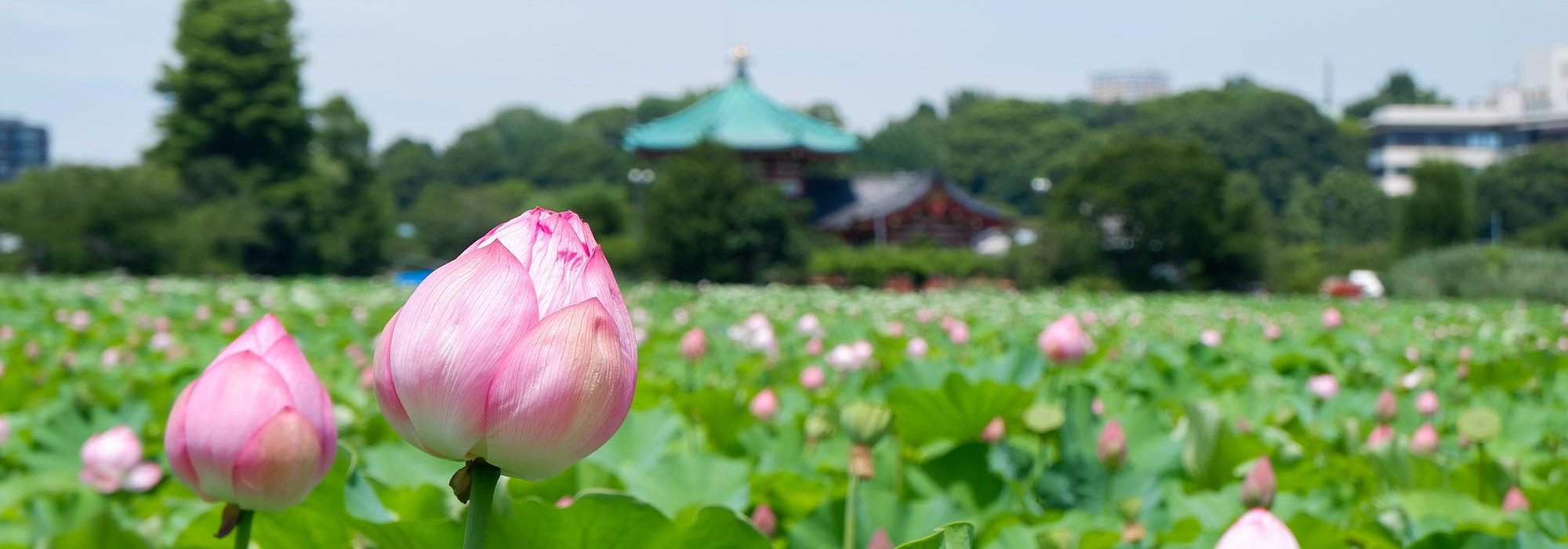
- Hasu lotus and various water lilies open their delicate flowers at the surface of the ponds of Japanese gardens, or in basins especially at Komyo-ji temple in Kamakura and Mimuroto-ji in Uji, as well as in Gyoda’s old 100,000 lotus village, Kodai Hasu no Sato, in Saitama prefecture, and at the famous Shinobazu pond of Ueno Park. The renge lotus flower is associated to Buddhism in which it symbolizes reincarnation and purity, and its root called renkon is also a staple of Japanese cuisine;
- Himawari sunflowers, are seen mainly in the Japanese countryside, such as the sunflower field of Zama in Kanagawa prefecture, Nagisa Park near Otsu, and in Hokkaido island renowned for it rural and colorful landscapes;
- Rabenda, the lavender that is also particularly cultivated in the north of Japan for example, on the hillsides of Abukumado Limestone Cave in Fukushima prefecture, in Farm Tomita in the vicinity of Sapporo and in the area of Furano and Biei that is easier to discover traveling by car;
- Asagao morning glory, kept in flowerpots on a balcony or to decorate the houses’ front doors; and,
- Daria, dahlias, that precede the arrival of autumn and can be seen in floral parks such as Akita International Dahlia Garden located near Akita airport, or at the occasion of the dahlias festival at Grinpa attraction park in Shizuoka prefecture, with a view on Mount Fuji.

🍂 September - October: cosmos, licorice and Alpine koyo
The red wave of Japanese autumn typically unfurls starting mid-September, following 2 symbolic blooming of the archipelago:
- The cosmos kosumosu, also called "the fall cherry blossom" for its pale pink and white hues, that bloom in the countryside fields until October; and,
- Higanbana, the red licorice associated to the Autumn equinox taking place around September 20th, and that also symbolizes bereavement. The higanbana flower grows on the side of roads, rice fields and rivers, rather in rural areas of Japan or in slight touches in Japanese gardens such as Koishikawa Korakuen. It also exists in white, yellow or pink flowers.
The 1rst Japanese koyo of the year appear on Hokkaido island starting the end of September. This first change of color actually affects the vegetation located in altitude, and doesn’t refer to the foliage of the Japanese maple trees that don’t grow on high mountains. Therefore, these precursor fall colors refer to:
- Alpine koyo, that reach their peak color in Hokkaido around September 25, especially at Daisetsuzan National Park, then in the Japanese Alps in the beginning of October; we recommend traveling on the Tateyama Kurobe Alpine Route just before its winter closing, as well as in the Valley of Kamikochi;
- Kusamomiji, the autumn color grass, that is growing in natural wetlands and marshland such as Oze National Park, located about a 100km to the north of Tokyo, that can be visited until mid-October depending on the year;
- Susuki pampa grass, that turns into a lovely golden when its feathery flowers bloom, from September to November depending on the location. We recommend the heights of Hakone and the fields of Sengokuhara, or Tonomine Highlands in Hyogo prefecture;
- Sazanka autumn camellias, whose perfume enchant Japanese gardens during their blooming from October to November, for example in Osaka’s Suminoe Park;
- Jugatsu-zakura, the autumn cherry blossom, that bloom here and there in the city, such as at the exit of Kyobashi station in Tokyo, between October and throughout winter, and also in April.

🍁 November: chrysanthemums, gingko and momiji
November is one of the most beautiful times to travel in Japan, thanks to a usually sunny weather on the daytime, that becomes cooler at nightfall. Its is the best time to watch:
- Kiku chrysanthemums that are displayed in floral arrangements at the entrance of temples, shrines and Japanese gardens, such as Meiji-jingu in Tokyo or Yahiko-jinja in Niigata. The flower is the emblem of the imperial family;
- Icho ginkgo biloba offers another wonderful foliage to the Japanese autumn starting a few days before the maple trees. Their gold color is the symbol of financial wealth. Tokyo is an excellent destination to enjoy these trees, especially at the Icho Namiki alleys of Meiji Jingu Gaien Park, in front of the National Diet building and at both Todai and Waseda university campuses;
- Momiji 🍁 Japanese maple trees, that are the symbol of fall in the archipelago, with their koyo leaves turning into a flamboyant red, throughout the country and especially in the cities, in Japanese gardens that set up beautiful night illuminations, or in the mountains, such as the top of Mount Takao.

🎍 December - January: winter flowers
Early December Japan is also blessed with beautiful red maple trees landscapes, especially in the multiple places of worship of Kyoto that are planted with a lot of momiji. Then, nature enters winter sleep, which is the slowest period regarding blooming. However, a few flowers still bud:
- Tsubaki camellias that bloom until the end of winter in beautiful lively colors;
- Fuyu-botan or kan-bontan winter peonies that are specially cultivated and put in "artificial hibernation" to have them delicately bloom in winter, protected from rain and snow by a straw cover. The other peonies species bloom in spring;
- Suisen daffodils and narcissus, that are perennial bulbous plants growing at the end of winter. At the same period, other flowers such as pansies, crocuses, snowdrops and violets bloom.
The green touch is brought by the "three friends of winter," or shochikubai in Japanese, that is to say the pine tree, the bamboo and the plum tree, known for resistance to cold weather, their evergreen state and the fact that they are the first to bloom. These 3 plants are also believed to bring luck during the New Year celebrations.