
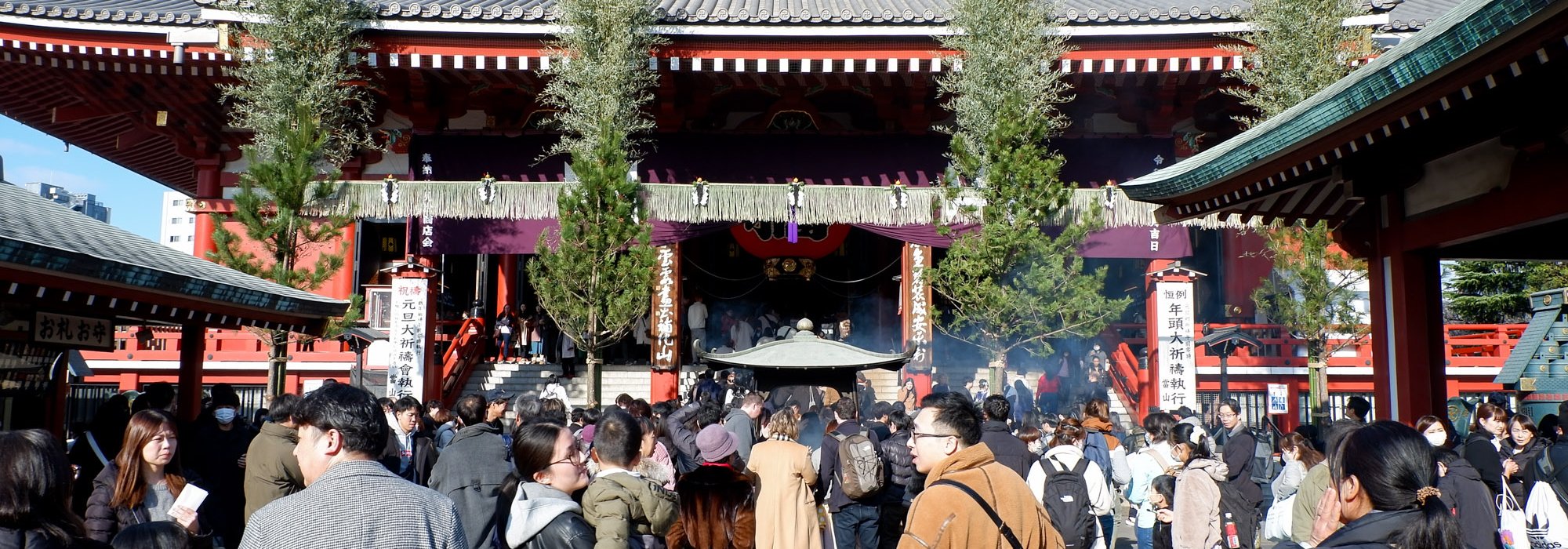
Ganjitsu
The 1rst Day of the Year in Japan
Ganjitsu is the New Year’s Day and a bank holiday in Japan, established on January 1rst in 1873 according to the Gregorian calendar. It is a day of family reunion and of many customs to ensure a good start of the year.
Ganjitsu, or New Year’s Day (literally 元日, the "first day of the year"), takes place on January 1rst in Japan and is one of the five sekku (節句) celebrations marking the passing of seasons, along with:
- March 3 (Hina Matsuri 🎎, "dolls festival" or "girls’ day");
- May 5 (Kodomo no Hi, Children’s day or Boys’ day);
- July 7 (Tanabata 🎋, the Star Festival); and,
- September 9 (Kiku no sekku, the chrysanthemum festival).
The New Year’s Day is an ancient celebration but did not always take place on January 1rst in Japan. Ceremonies documented from at least the Heian period were following the former luni-solar calendar and thus were held around Setsubun time (currently on February 3) to mark the end of winter and the beginning of spring 🌸.
The celebration of the New Year’s Day was officially established on January 1rst in the beginning of the Meiji era (1868-1912) when the Gregorian calendar was implemented in 1873. It became a national holiday in 1948.
A beloved family holiday
The time of the year end and the beginning of the new year, especially Ganjitsu, are probably one of the most important celebrations in the archipelago and preparations start as soon as December with, for example a big "spring cleaning" (at home as well as at work) or the settling of debts.
Therefore the New Year "holidays" usually take place over one week between December 29 and January 5 (dates vary according to the years). Business and activity slow down, with many companies and administrations partially or completely closing for these few days where people usually stay at home with family. It is not unusual that museums, banks and even hotels 🏨 be closed between January 1rst to 3rd, on the 3 first days of the year (sanganichi 三が日) and children don’t have school. However, most of the konbini are open.

How is Ganjitsu celebrated?
Ganjitsu is the culmination of the New Year celebrations, preceded by Omisoka (the eve of New Year’s Day) that ends by eating a soba noodle dish.
Ganjitsu is characterized by a series of "first times":
- Hatsumode (初詣), the first visit of the year at a temple or a shrine, that can take place as soon as midnight. At the temple, people draw an omikuji prediction, or drink a cup of sake at the shrine;
- Hatsuhinode (初日の出), the first sunrise of the year, that can be admired everywhere;
- Hatsuyume (初夢), the first dream of the year, in the 1rst or the 2nd night. A dream including Mount Fuji, a falcon or eggplants bodes well for the coming year. These images are used as illustrations for goshuin seals and lucky-charms.
As for food, on the New Year’s Day, and usually until January 3, meals are Osechi Ryori dishes prepared in advance to fully enjoy the days of rest and celebration. After a visit to the temple, people also eat ozoni, a dish specific to Ganjitsu: a hearty soup with mochi, vegetables, meat or fish, and seasoned with soy sauce or miso.
The family time is spend cooking and eating mochi, and playing traditional games such as karuta cards, or a kind of snakes and ladders game called sugoroku. Other traditional New Year’s Day games are hanetsuki, a kind of paddle game, or takoage kite flying.
The house is adorned with symbolic and auspicious decorations, such as: kadomatsu compositions of pine branches and bamboo at the entrances, images of the Takarabune "lucky boat” and of the 7 Lucky Gods. Kagami mochi (confectionery made of 2 mochi and a small bitter orange stacked together) are placed as offerings on the family altar.
Lastly, January 1rst is also the day of otoshidama, the cash gifts offered to children by the older members of the family, and households receive negajo, the season’s greetings cards strategically sent to be delivered in January between the 1rst and the 7th.

Thwarting bad omens on Ganjitsu
The passage to the new year is a time filled with superstitions and customs 🛂 to ensure the best possible start of the year.
Thus, the first 3 days of the year sanganichi are subjected to a few rules that may seem strange:
- No housekeeping, especially when using a lot of water, as it is a risk of chasing off the "new year’s gods" and bring misfortune to the house;
- Likewise, cooking should not involve a knife, as it can symbolically cut ties; nor cooking with fire, which produces lye, whose Japanese name aku 灰汁 is homonym to the word "evil" aku 悪; or,
- Eating meat from a 4-legged animal is also taboo.
Ganjitsu is the occasion to make sure to have luck on one’s side, especially if entering an "unlucky year" called yakudoshi in Japanese. A yakudoshi happens several times in a lifetime at specific ages (that may vary according to the regions) and is a year prone to a higher probability of disease, accident or any bad event. It is usually not recommended to start new projects or doing big travels in a yakudoshi year. The ages affected are:
- 25, 42 and 61 years old for men;
- 19, 33, 37 and 61 years old for women.
The unlucky year begins on January 1rst, even if the affected person’s birthday happens later in the year. Believers are encouraged to take part into various purification rituals and ceremonies at their Shinto shrines (carrying a mikoshi portable shrine at a festival for example). Hachiman shrines are holding yakubarai purification ceremonies in January for people entering a calamitous year. It is also possible to purchase amulets to thwart ill fate.

Where to celebrate Ganjitsu?
The best way to celebrate Ganjitsu is undoubtedly to visit a temple or a shrine in the wee hours of New Year’s Day, if comfortable with the crowds of Hatsumode, like:
- Sumiyoshi Taisha great shrine in Osaka;
- Meiji Jingu shrine in Tokyo;
- Naritasan Shinshoji temple in Narita;
- Yasaka-jinja shrine in Gion district, for the Okera-mairi, an event typical of Kyoto on December 31 and January 1rst, and bring back fire for the family altar and ozoni cooking;
- Iwashimizu Hachiman-gu shrine.
The most farsighted travelers can book their seat in advance to view the first sunrise, for example at the Tokyo Metropolitan Government Office in Shinjuku, or to fly above Mount Fuji 🗻 in the first flight ✈️ of the year offered by some Japanese airlines.
From January 1rst, you can wish a good year by saying: akemashite omedeto gozaimasu (あけましておめでとうございます).