
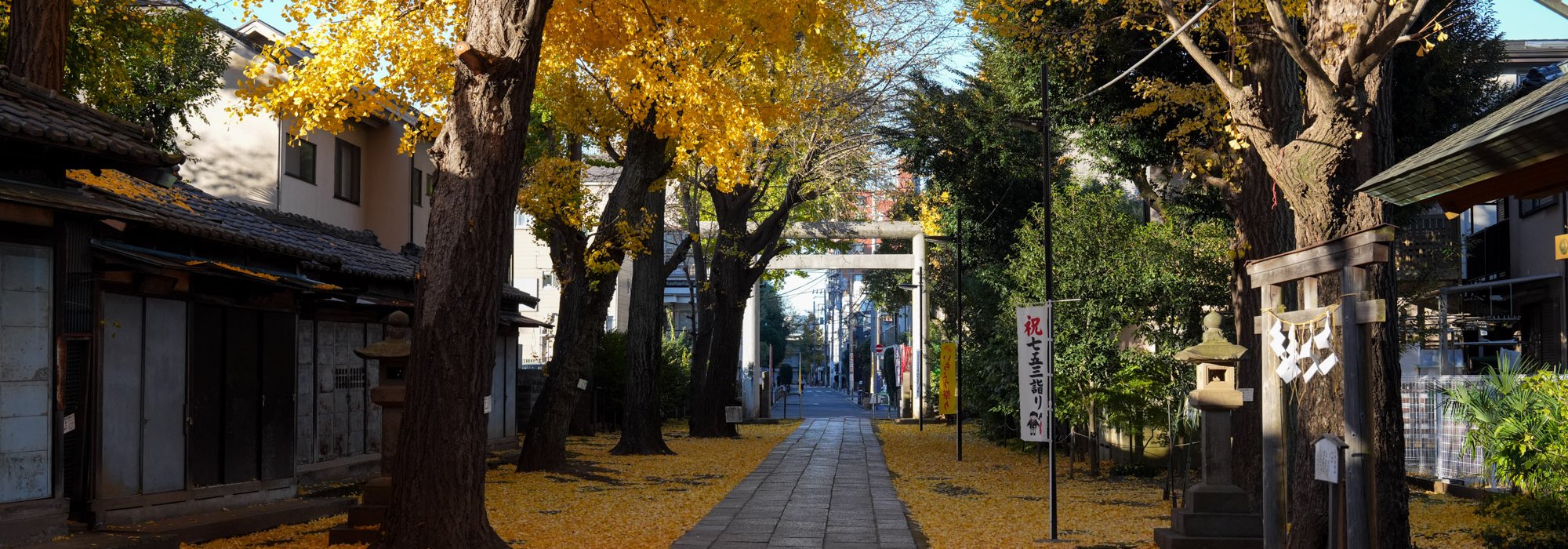
Komagome Tenso-jinja
Tokyo's Quiet Ginkgo-Lined Lane in the North
Komagome Tenso-jinja is a small Shinto shrine tucked into a residential neighborhood of Hon-Komagome, in Tokyo's Bunkyo ward in Japan. Founded in the late 12th century, it's a well-known spot for ginkgo trees, best visited in late November when the golden leaves light up the grounds.
Komagome Tenso-jinja sits about halfway between Rikugi-en garden and the charming retro neighborhood of Yanesen, in Bunkyo ward, north of the city center defined by the circular Yamanote train 🚅 line.
It's said to have been established in 1189 by Minamoto no Yoritomo, founder of the Kamakura shogunate, following an auspicious dream related to his conflict with the Fujiwara clan of Hiraizumi. Dedicated to the sun goddess Amaterasu, one of the main kami of the Shinto pantheon, the shrine was originally known informally as Shinmei-sama, a reference to its Shinmei-zukuri architectural style typical of shrines honoring Amaterasu—the most famous being Ise Jingu.
Left in decline until the mid-17th century, it regained some standing thanks to the lords of Echigo Province and was renamed Komagome Shinmei-gu, the guardian shrine of the village of Komagome Shinmeicho.
Burned down during an air raid in 1945, its main hall was rebuilt in 1954.

A ginkgo hotspot in autumn
This unassuming Shinto shrine blends right into the mostly residential neighborhood around it. Its large torii ⛩️ gate opens onto a paved lane lined with tall ginkgo biloba trees, the site's main draw—prized in summer for its cool shade and greenery, and in autumn for the trees' golden foliage. The golden leaves are even celebrated during the annual Icho Matsuri (銀杏祭り, Ginkgo Festival), held every year on the last Saturday of November within the shrine's small grounds.
The Sando approach leads to the shrine's main hall, topped with a roof typical of the Shinmei-zukuri style. Originally built around a sacred pine tree, the shrine today venerates a large camphor tree adorned with a shimenawa rope. The Kame-ishi turtle rock receives the prayers of those hoping for financial prosperity.

A peaceful neighborhood shrine
While the best time to visit is late in the season, other highlights on the Shinto calendar draw local residents throughout the year:
- The shrine's major Reitaisai festival in mid-September;
- Shichi-go-san, a family-friendly celebration in November;
- The nagoshi no harae purification rituals at the end of June and the end of December; and,
- The Yama Biraki festival in late June/early July, held jointly with the neighboring Komagome Fuji-jinja to mark the opening of the mountain hiking season.
During these events, the shrine's lane comes alive with colorful yatai food stalls, creating a lively festival atmosphere.
Year-round, the shrine also collects used dolls and stuffed animals for the Ningyo Kansha Sai ritual, allowing their owners to part with them without spiritual concern.
Komagome Tenso-jinja is especially appealing in the second half of November, when the golden koyo 🍁 of its ginkgo-lined lane are in full display. It's also a pleasant spot to pass through the rest of the year, whether during one of its festivals or simply while wandering through northern Bunkyo ward or heading toward the University of Tokyo (Todai) campus and the Yanesen district.