
Shimane (Prefecture)
A Shinto Center by the Sea of Japan
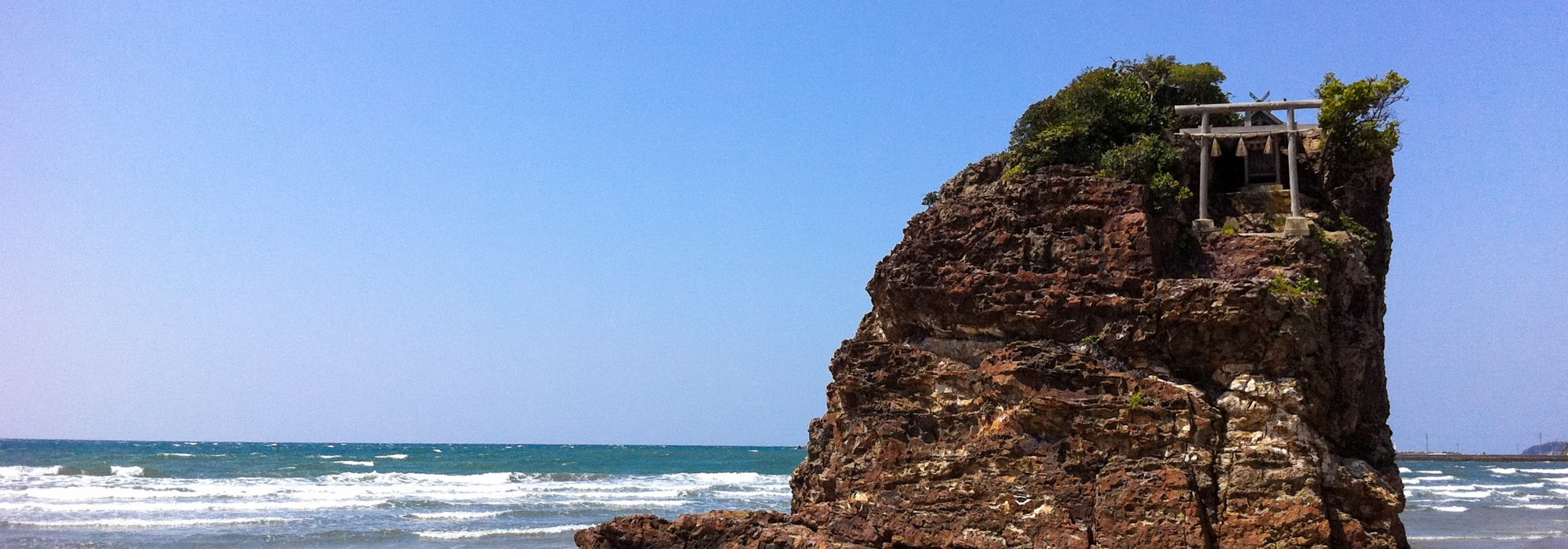
Shimane is a Japanese prefecture stretching along the Sea of Japan, on the northern coast of the Chugoku area in the West of Honshu, the main island of Japan. While rural and sparsely inhabited, the area is home to an important Shinto spirituality and boasts several remarkable historical sites. Matsue, its capital, is adorned by one of the last 12 authentic keeps of the archipelago.
Located in the Chugoku area, Shimane appeals both to amateurs of Japanese history and myths and lovers of beautiful landscapes and diving. The prefecture is indeed situated along the Sea of Japan and features natural sceneries of mountains and wild seasides. It is served by 3 regional airports (Izumo, Oki and Hagi-Iwami) and easily accessible by Shinkansen 🚅 bullet train from Tokyo or Kyoto with a transfer at Okayama station. It is one of Japan’s 3 less populated prefectures (642,590 inhabitants as per January 1rst, 2025) along with Tottori and Kochi.
Matsue’s feudal heritage
Capital of Shimane prefecture, Matsue was built on a wetland in the early 17th century. Its typical merchant and samurai districts are remains of the Edo period (1603 – 1868). Matsue is also nicknamed the "city of water" due to the waterways surrounding its keep, the Ohashi River that flows into its center and the lakes Shinji and Nakaumi enclosing it.
Matsue Castle 🏯 is an old fortress completed in 1611 after 5 years of construction. Its original keep makes it one of the 12 last authentic castles of Japan, designated National Treasure since 2015.

The historic center is home to the Lafcadio Hearn Memorial Museum paying tribute to the English writer, who was the 1rst to be naturalized Japanese at the end of the 19th century. At the south-east of the city, in Yasugi town, the Adachi Art Museum is dedicated to modern art and is characterized by a large Japanese garden testimony of the country’s expertise in the matter.
Its lakes provide a lot of attractiveness to Matsue, starting with Lake Shinji (Shinji-ko), the 7th biggest lake in Japan, with a 45km circumference and a 16km length. Its shores are home to spa resorts supplied by natural hot springs, such as Shinjiko Onsen ♨️ and Tamatsukuri Onsen, one of the oldest onsen hot springs in Japan. Visitors can enjoy its 7 food delicacies throughout the year:
- Shijimi clams and eels in summer;
- Shrimps in autumn;
- Bass, carp and smelt in winter; and,
- Spring whitebait when a warmer weather returns.
Shinji-ko is uniquely connected to the Sea of Japan through Lake Nakaumi. The later also connects Matsue with Sakaiminato and its waters welcome Daikonshima, an island home to Yushi-en, a Japanese garden renowned for its peony festival in spring 🌸 and its colorful maple foliage in autumn 🍁. The neighboring town Yasugi can also be mentioned for its importance in metalwork history and for its collection of Bizen ceramics.

Izumo Taisha, the place where kami meet
Not far from Matsue, Izumo Taisha or "Izumo Great Shrine" is the 2nd most important Shinto shrine in the country, after Mie prefecture’s Ise Jingu. It is also one of the oldest spiritual sites of Japan, with origins dating back to the 8th century. Considered as one of the mythical cradles of Japanese civilization, it is a National Treasure since 1952.
Dedicated to Okuninushi, the god creator of spirits, nations, business and medicine, as well as to the concept of the "binding of fates" called en-musubi in Japanese, Izumo shrine also welcomes all the kami deities of the Shinto pantheon for a yearly gathering.

Oda and the prefecture’s industrial past
Despite being very rural and far from the Pacific coast’s large cities, Shimane prefecture was nonetheless a very important financial hub during feudal times. Its silver mine called Iwami Ginzan indeed produced a third of the world’s silver ore in the 16th century. The mining village is now open to the public and enlisted in the UNESCO World Heritage.
Mount Sanbe is standing to the north-east of Oda town. Its green environment is ideal for hiking, especially for beginner walkers, and dipping in onsen hot springs.

The breathtaking landscapes of Oki archipelago
Located in the north of the prefecture, Oki archipelago belongs to Daisen-Oki National Park and has been part of the UNESCO Global Geoparks since 2013. Of the 180 islands constituting the archipelago, only 4 are still inhabited. The rest of the territory has return to a natural state creating breathtaking views. Famous for its crystalline waters, Oki Archipelago is the ideal spot for snorkeling, swimming, kayaking and other aquatic activities. For example:
- Diving lessons are available, as well as the possibility to rent diving equipment for the more seasoned divers;
- Those wanting to explore the coastline but stay dry can ride a boat, such as an Amanbow, that is a boat with a glass bottom allowing to view the marine wildlife from a dry place;
- Seasoned hikers can walk along the steep coastline to enjoy the panoramic views.
Ferries connect the archipelago to Matsue through the port of Shichirui (Mihonoseki), in about 2,5 hours.

Tsuwano and Masuda, the southern feudal cities
The town of Masuda is renowned for its ancestral practice of yabusame, an activity combining archery and horse riding. It was also a place where 2 famous Japanese historical personalities once stayed:
- Kakinomoto no Hitomaro (662 - 710), a poet of Japan’s classical age, who penned several waka of the Man'yoshu;
- Sesshu (1420 - 1506), a Buddhist monk and painter to whom a memorial museum is dedicated in the city.
Tsuwano focuses on its feudal heritage, with:
- Tonomachi samurai district;
- Taikodani Inari shrine; and,
- The ruins of its castle.
On a side note, Tsuwano’s rivers were used as food reservoir and filled with carps to eat in case of a famine.
Additionally, the inland southern part of the prefecture also has a couple of ski resorts to enjoy snow in winter.

A prefecture rich of Japanese history and mythology, Shimane is an interesting travel choice for tourists looking for underrated, off the beaten tracks destinations that are accessible by public transport.
Thanks to its location, quite removed from the country’s largest city, it provide visitors with quietness and a change of scenery. It can, for example, be part of a trip already including a few days in the neighboring Tottori prefecture, famous for its sand dunes and manga pilgrimages in the cities of Hokuei and Sakaiminato.