
What To Do In Japan In 2026
Last year marked a new record for tourism industry in Japan as the archipelago has attracted 39,06 million people between January and November 2025, that is to say 10% more travelers than in 2024. and the Japanese government is aiming at 60 million visitors per year by 2030.
Japan hosted the international exhibition Expo 2025 Osaka in Yumeshima, an artificial island in Osaka Bay, that attracted about 28 million visitors. Asian travelers avoided the archipelago during summer 2025 after a rumor (based on a prophecy by mangaka Ryo Tatsuki) spread on social networks that a mega-quake would hit Japan in early July. In November, comments by newly appointed Prime Minister Sanae Takaichi on Taiwan sparked a touristic boycott from China, incurring the cancellation of 40% of flights between the 2 countries in December. This Chinese tourists drop in Japan is expected to last until March 2026.
Tokyo remains the 1rst urban destination in Asia according to several world rankings, especially:
- The Global Power City Index (GPCI) 2025 by the Mori Memorial Foundation’s Institute for Urban Strategies that rates the competitiveness of 48 big cities in the world. The Japanese capital ranked at the 2nd place behind London, overtaking New York for the 1rst time.
- The Top 100 City Destinations Index 2025 by Euromonitor International places Tokyo at the 3rd rank behind Paris and Madrid.
As for the Yen 💴 exchange rate, it remained exceptionally attractive for Euro and US Dollar users throughout the year 2025. On Monday December 22nd it traded for the record low ¥185 for €1. The value of the Yen could lower even more to 190 Yens for 1 Euro; however economists think that the Japanese currency might recover and rise again from 2026’s second half.
Traveling in Japan in the first part of 2026 (at least until March) remains very attractive as far as budget is concerned, especially for Western tourists, as their spending power is still high despite price inflation in Japan.

Important dates and milestones of 2026
Tokyo and Kyoto still receive the bulk of the visitors. The former imperial capital and well-known destinations such as Hakone, Kamakura, Nikko, Nara and Miyajima are all affected by overtourism, due to their smaller sizes and especially during the busiest touristic seasons of Japan. The most crowded periods are:
- The sakura 🌸 blossom season in the beginning of spring, from March 20th to early April on average in the most visited areas;
- The Golden Week, that will take place from April 29th (Wednesday) to May 5th (Tuesday) in 2026;
- The Obon holidays, from August 8th (Saturday) to 16th (Sunday), 2026;
- The koyo 🍁 foliage season, especially on the weekends from mid-November to early December; and,
- The New Year’s holidays, starting December 26th (Saturday), 2026 and ending on January 3rd (Saturday), 2027.
2026 in Japan will have 17 bank holidays and a "true" holiday week for the Silver Week, that will take place from September 19th (Saturday) to 23th (Wednesday), 2026.
The opening of most tourist attractions should not be too impacted by these events.
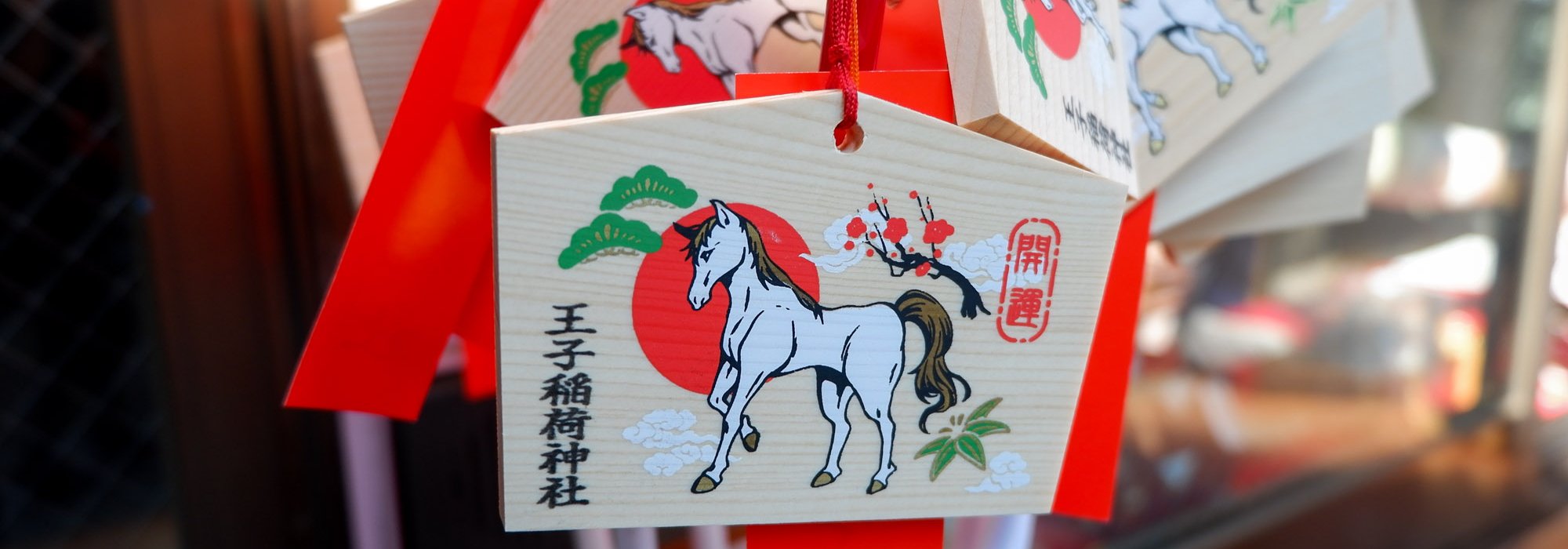
2026 is also the 8th year of the Reiwa era, started in 2019 with the enthronement of emperor Naruhito. The Chinese zodiac sign in 2026 is the horse and the Chinese New Year will take place later than usual: from February 17th to March 3rd, 2026.
Anniversaries in 2026
A few anniversaries are celebrated in 2026:
- The 40 years of anime Dragon Ball by Toei Animation studio, that was aired for the 1rst time in 1986;
- The 25th anniversary of 2 major theme parks of Japan:
- Tokyo DisneySea inaugurated on September 4th, 2001, celebrates its anniversary with the event Sparkling Jubilee from April 15th, 2026 to March 31rst, 2027.
- And Universal Studios Japan in Osaka, opened on March 31, 2001, is hosting the event Discover U!!! from May 4th, 2026 to March 30th, 2027;
- The 100 years of the Showa era, that began on December 25th, 1926 and ended on January 7th, 1989.
Major sport events
Japan will host the following sporting events in 2026:
- The 6 yearly Sumo tournaments are announced at the following dates:
- January tournament from January 11th to 25th, 2026 in Tokyo;
- March tournament from March 8th to 22nd, 2026 in Osaka;
- May tournament from May 10th to 24th, 2026 in Tokyo;
- July tournament from July 12th to 26th, 2026 in Nagoya;
- September tournament from September 13th to 27th, 2026 in Tokyo;
- November tournament from November 8th to 22nd, 2026 in Fukuoka.
- Tokyo Marathon 2026 will take place on March 1rst.
- 2026 World Lacrosse Women’s Championship will be hosted from July 24th to August 2nd in the sports facilities built for the 2020 Tokyo Olympics in Minato and Shinagawa wards.
- The 2026 Asian Games are hosted in Nagoya, Aichi prefecture, from September 19th to October 4th, 2026.

Inaugurations and reopenings in 2026
The editorial team at Kanpai has listed a few new interesting destinations for 2026.
Attractions and museums
- The main event in 2026 is the opening of the 1rst Pokémon-themed park, called PokéPark Kanto, located in Yomiuriland (Tokyo’s suburb) on February 5th, 2026.
- Kawaii Monster Land, a small indoor theme park, opens on February 13th in Harajuku.
- Major touristic sites should reopen after long renovation works, including:
- Enryaku-ji temple in Otsu and Kodai-ji temple in Kyoto;
- The Edo-Tokyo Museum reopens on March 31rd, 2026;
- Shuri Castle 🏯 in Okinawa Honto, that burnt down in 2019. Its main building’s reconstruction is scheduled for completion for fall 2026; and,
- Hirosaki Castle’s keep will be moved back to its original site also in autumn 2026.
- On Odaiba island, Tokyo Dream Park cultural site’s opening is scheduled on March 27th, 2026. It will be home (notably) to several show venues, a roof-top area, an exhibition space dedicated to Doaremon and the 1rst installation in Japan by the Parisian immersive digital art center Atelier des Lumières, called Rêve des Lumières ("Dream of lights").
- The Takanawa Gateway City complex on the Yamanote Line continues its expansion with the opening of MoN Takanawa: The Museum of Narratives on March 28th, 2026.
- The Toei Eigamura park in Kyoto inaugurates on March 28th, 2026 a new development phase with the immersive world called Uzumasa Kyoto Village, aiming at adult visitors interested in enjoying the former imperial city’s atmosphere during the Edo period.
- Still in Kyoto, the latest permanent museum teamlab Biovortex opened on October 7th, 2025, and the digital art museum Miracle World Osaka opened on December 5th, 2025 in Namba.
- The former Mikasa Hotel in Karuizawa just reopened as a museum after a long renovation period started in 2020. The facility is characterized by a preserved wooden architecture in a Western-style initially built in 1905. Karuizawa will also inaugurate the new entertainment complex Karuizawa T-Site adjacent to its JR station in spring 2026.
- A new Evangelion-themed attraction, Evangelion The Ride-8K- will open in spring 2026 in the Huis Ten Bosch park located in Nagasaki prefecture.
- A new area dedicated to San-X’s kawaii characters is expected in 2026 at Fuji-Q Highland.
- The fashion and culture facility Yurakucho Park (Japa Valley Tokyo) is planned to open by the end of the year 2026.
On the other hand, a few places are set to close for renovation:
- Hiroshima Castle keep will close from March 22nd, 2026 on. Note that Nagoya’s castle is also under repair and not accessible until 2028.
- The 5-story pagoda of Itsukushima-jinja shrine in Miyajima is undergoing renovation works until December, 20, 2026.
Hotel and shopping complexes
- The Royal Park Hotels 🏨 group inaugurates 2 new facilities, The Royal Park Hotel Iconic Naha on January 30th, 2026 and The Royal Park Hotel Maihama Resort Tokyo-Bay near Tokyo Disney Resort on February 13th, 2026.
- A new urban complex including a skyscraper called Tofrom Yaesu will come to completion between February and July 2026 in Yaesu district.
- The mixed-used project Omotesando Grid Tower will be inaugurated in February 2026.
- The inauguration of Kyoto’s Imperial Hotel, in the historical building Yasaka Kaikan of Gion district is scheduled for March 5th, 2026.
- Nihonbashi’s large redevelopment project will welcome its 1rst high-rise building in March 2026, called Nihonbashi 1-Chome Central District Category 1 Urban Redevelopment Project. The homed facilities include the Waldorf Astoria Tokyo Nihonbashi hotel.
- The JR East Group opens the Oimachi Tracks urban complex on March 28, 2026 in the course of redevelopping the surroundings of Oimachi station in Shinagawa ward.
- The former Nara prison reopens on April 27th, 2026. Its red bricks buildings now home a history museum and a luxury hotel operated by Hoshino Resorts.

New red tapes for tourists
In order to better manage the tourist flow, reduce frauds and generate more revenue for the Japanese tourism industry, the government set up various measures since the post-Covid 🦠 crisis reopening of the borders, fostering new rules that will be implemented starting 2026, such as:
- The introduction of a dual pricing system, with higher admission fee for foreign tourists. For example, admission for Himeji Castle will at least double for visitors who are not resident of Hyogo prefecture starting on March 1rst, 2026.
- From the same date on, lodging tax in Kyoto will increase with a new rate card, that will have the most luxurious accommodation taxed heavier, up to ¥10,000 (~US$63.33) per night, compared to the current ¥1,000 (~US$6.33).
- Fees for visa application are also expected to spike from April 2026, with the 1rst price rise in 48 years in order to match the international standards. The ¥3,000 single-entry visa fee might increase to ¥15,000 (~US$94.99); a measure that does not apply to temporary visitors entering Japan under the visa-waiving system, such as tourists from the US or Canada. Foreign residents will also have to pay higher fees to renew their long-stay visa.
- The international tourist departure tax, whose price was fixed at ¥1,000 (~US$6.33) since 2019, will increase to about ¥3,000 (~US$19.00) per traveler in 2026.
- The "Tax-Free" program in Japan also changes from November 2026: international visitors seeking to have the VAT on their purchases (currently 10%) refunded will have to carry out the paperwork at the airport when flying back home, instead of at the store.
Limitations to access specific tourist attractions are already in place, such as advance reservation, sometimes for a fee and an hourly or daily visitors’ caps. Such restrictions have been imposed for climbing Mount Fuji 🗻 since 2024, and they also apply to most museums and observatories in Japan.
As of 2026, the Japan Electronic System for Travel Authorization (JESTA) is not necessary to travel in Japan, but it will be mandatory starting 2028 for foreign travelers who currently benefit from visa exemption to enter the archipelago. The use of the Visit Japan Web app is highly recommended to apply in advance for mandatory the custom and immigration procedures to enter Japan.

Kanpai’s selection for 2026
In 2026, we highly recommend adding at least 1 travel destination that is off-the-beaten touristic tracks to your trip in Japan:
- Near Tokyo, Chiba and Saitama prefectures have less busy destinations such as Narita city, Katori-jingu shrine, the Chichibu area and its mystical Mitsumine-jinja shrine.
- Near Kyoto, enjoy the coastline of the Sea of Japan in Kyotango, in Amanohashidate and Ine; Fukui prefecture and Eihei-ji temple, or the bamboo grove at Muko and the former imperial capital Nagaokakyo in the south of Kyoto prefecture. In Kyoto, we recommend temples and shrines on the heights of the city, that are less easy to access and therefore quieter, such as Enko-ji, Tanukidani-san Fudo-in, Konkai Komyo-ji, Shinnyo-do, Yoshida-jinja and Yoshimine-dera.
Cultural and immersive experiences are also nice activities and we recommend to at least try 1, such as a cooking class or a craft workshop, or dressing in a yukata 👘, discover calligraphy, have a private tea ceremony, a Zen meditation session or visit a nihonshu 🍶 brewery. To further the experience you can hire a local guide for a day who will help in better understanding the culture and optimizing your visit course.
The archipelago is home to diverse natural landscapes, such as high mountains in the Japanese Alps and in the Tohoku, the northern part of Honshu island, that are quite safe from overtourism. The sub-tropical beaches 🏖 of Okinawa archipelago, the main island Honto and its unique blended culture are also one flight ✈️ away so much so that they are in the National Geographic’s recommendations for 2026. The intense volcanic activity, especially in Kyushu with volcanoes such as Mount Aso and Sakurajima, as well as the national parks’ protected forests also make nice getaways from the big cities.
For a better trip planning and to make the most of your dream travel, you can also consult a specialized travel agency providing bespoke services like Keikaku.
Kanpai wishes you a Happy New Year and an excellent and unforgettable trip in Japan for 2026!